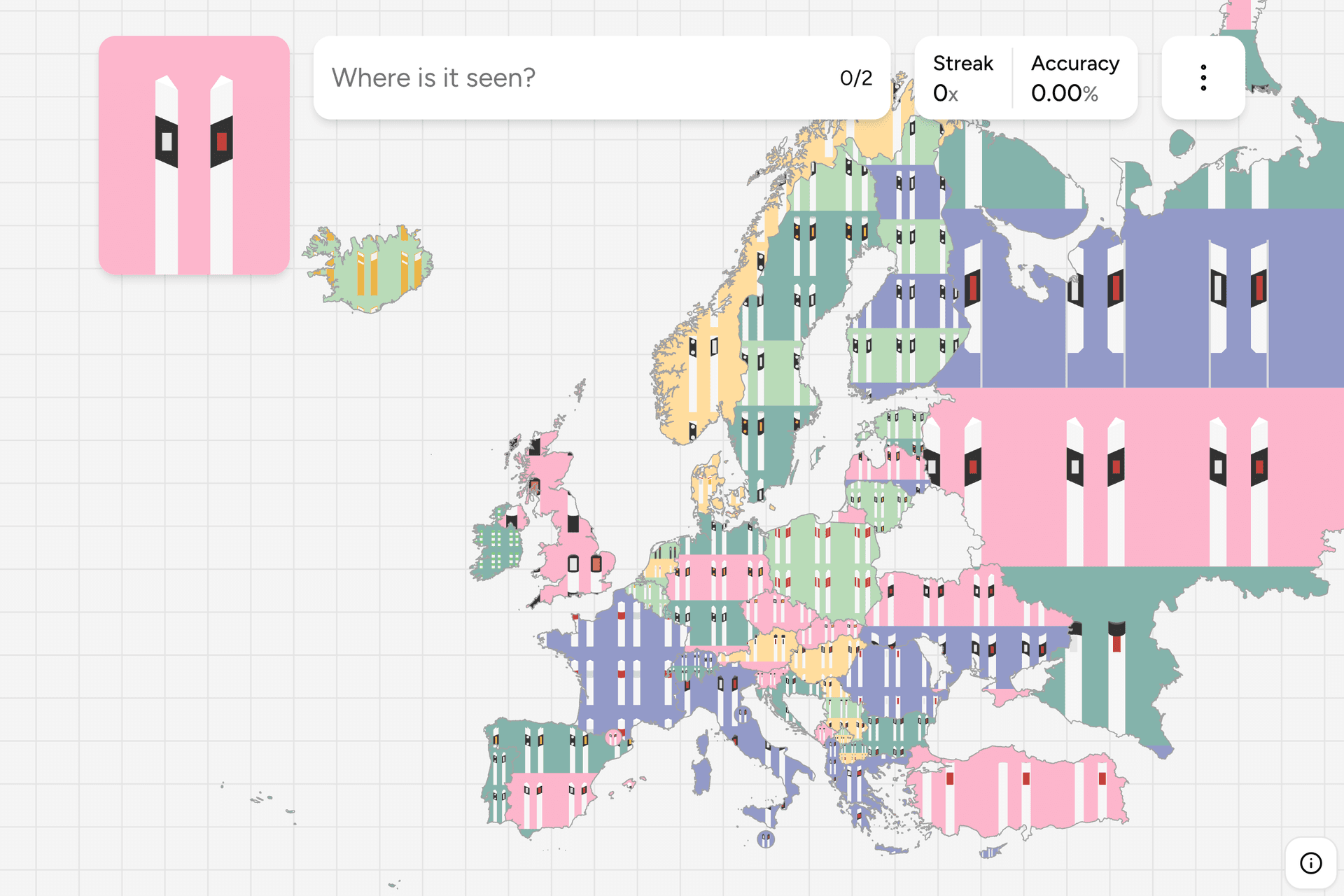
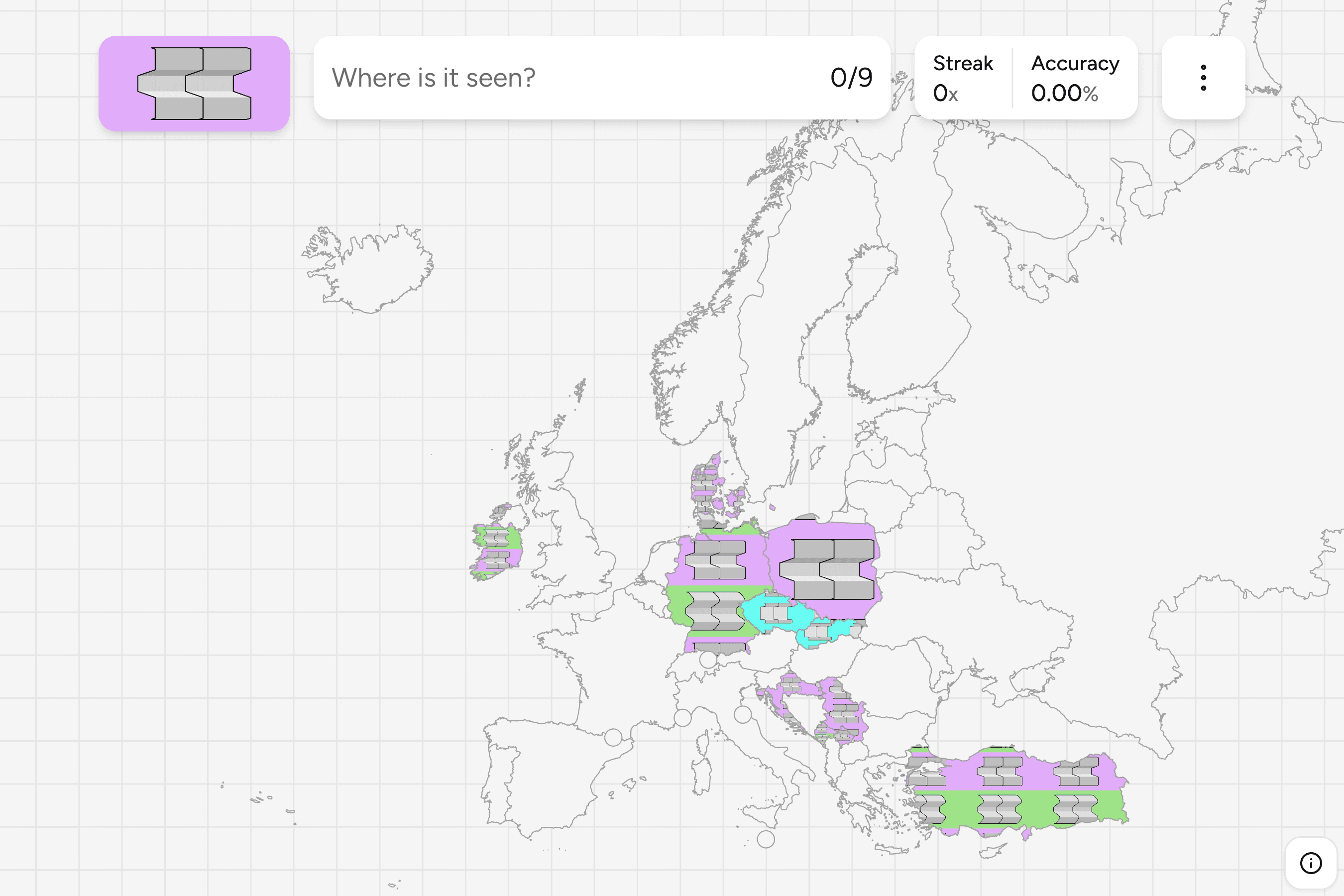
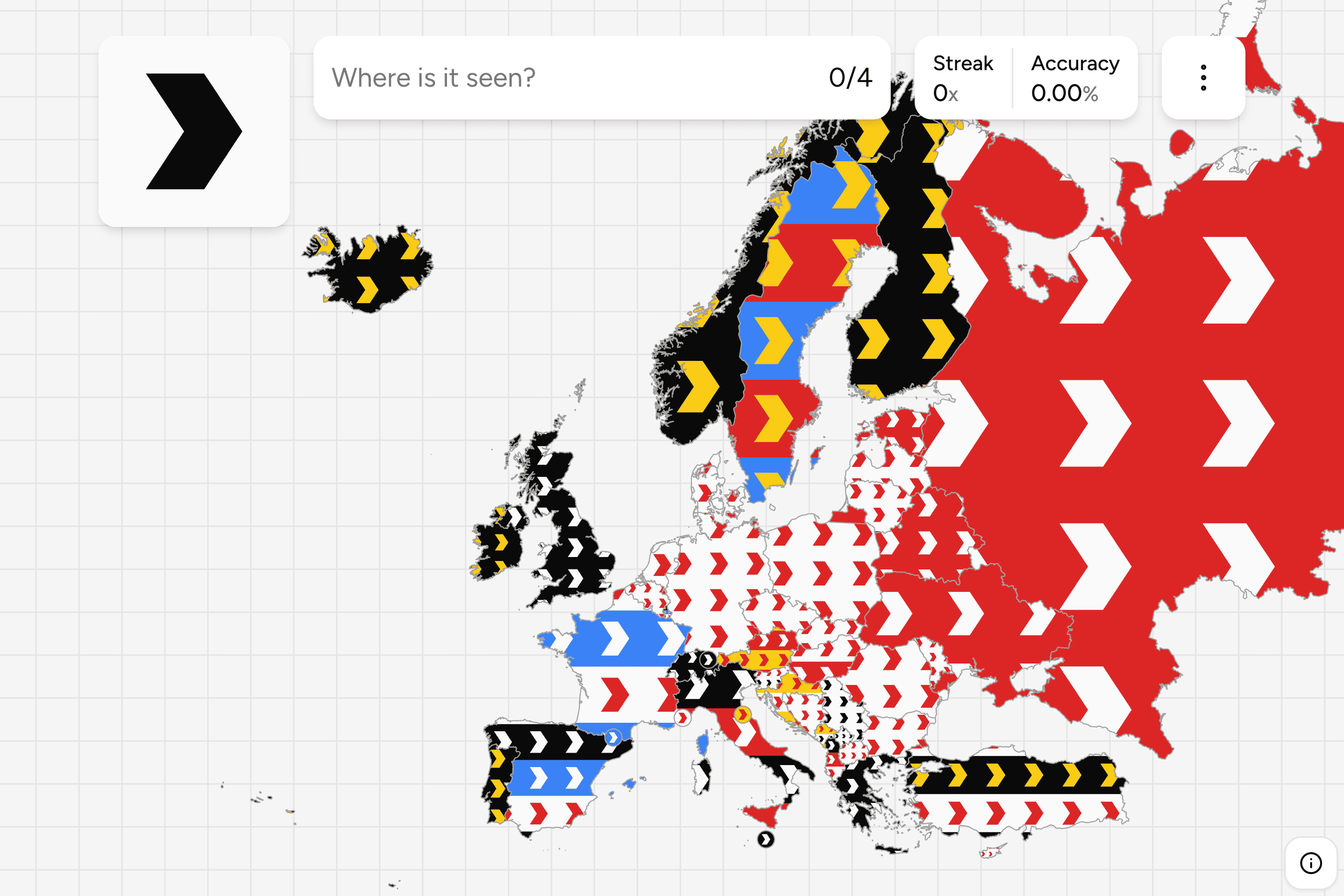
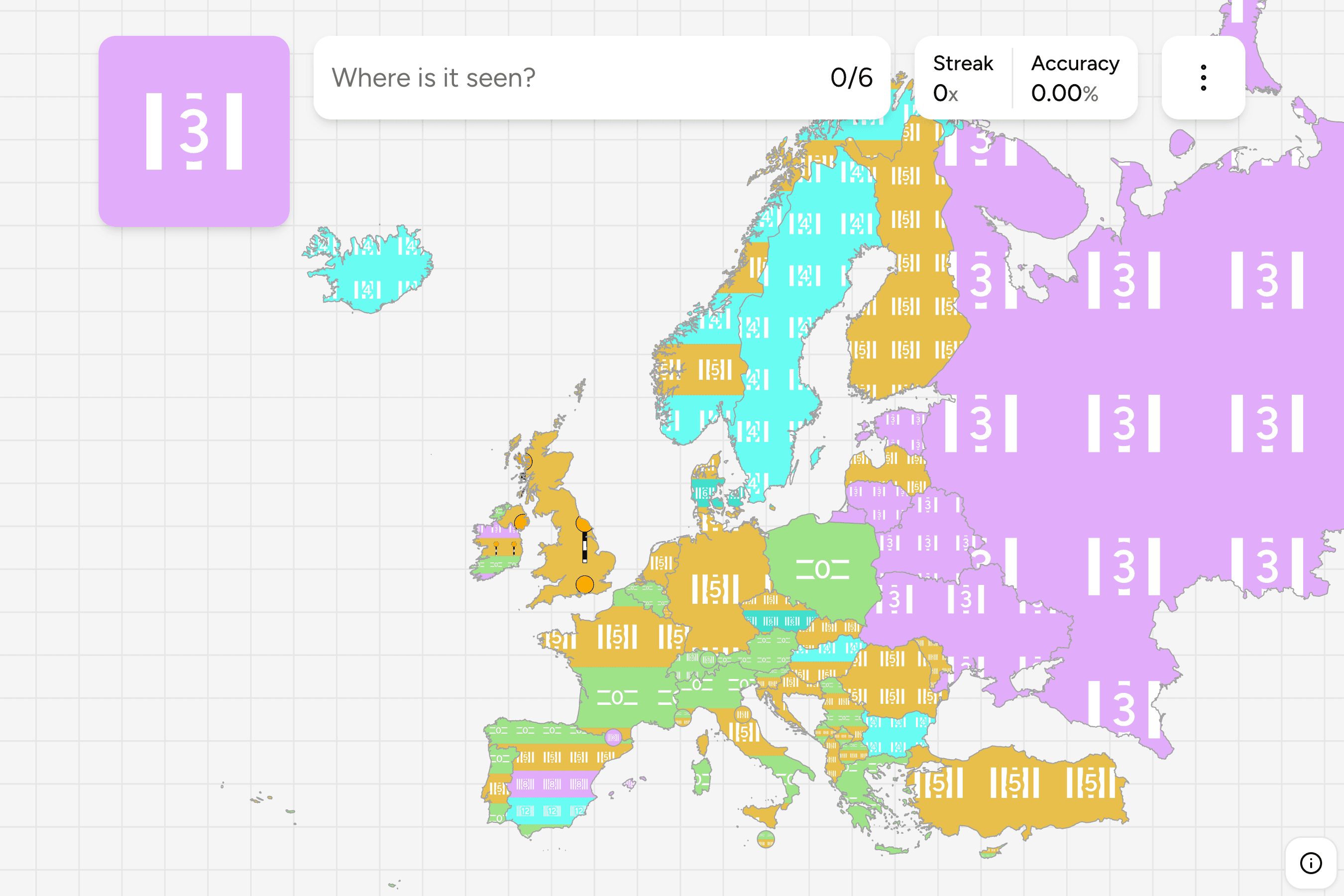
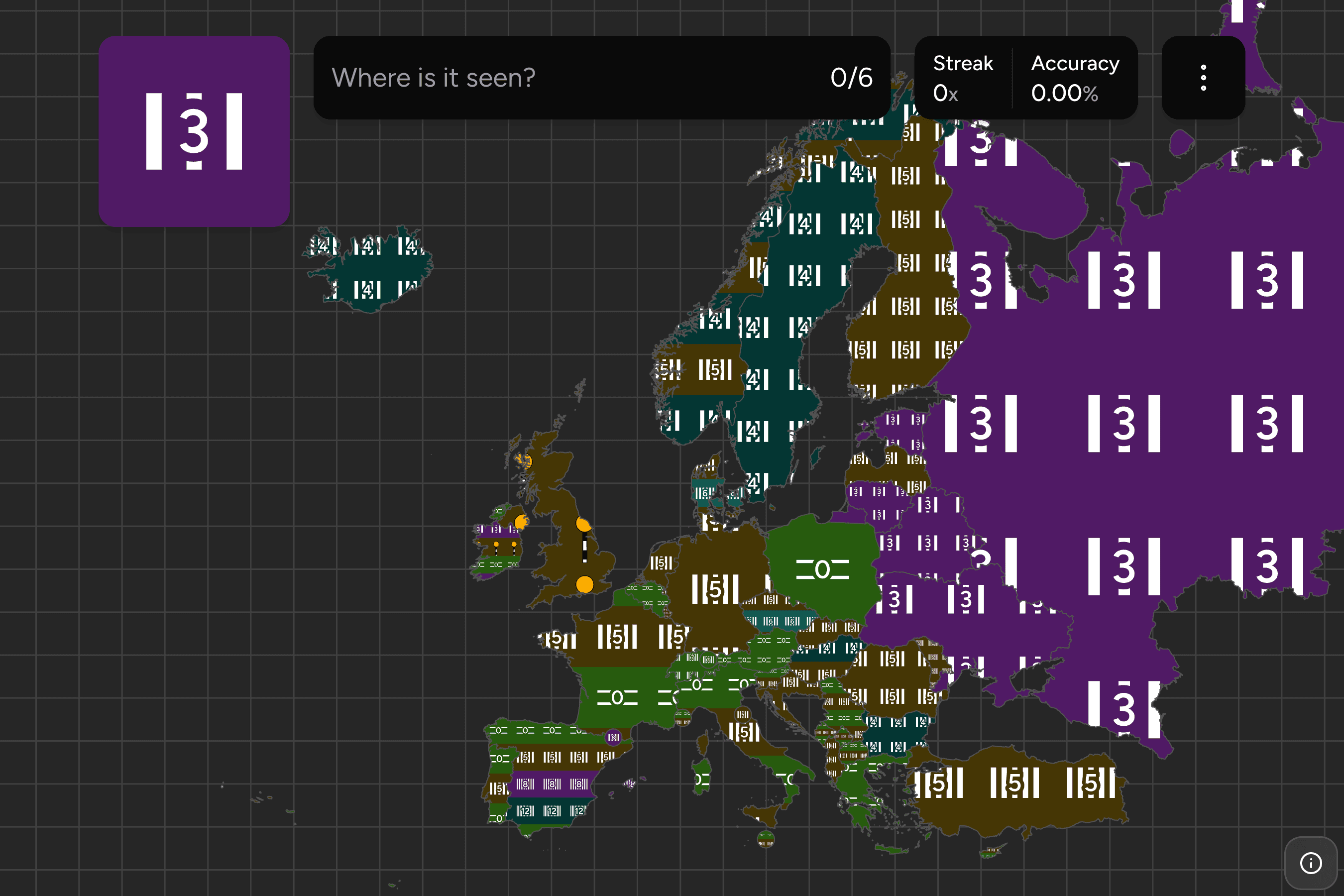
A bollard is the marker post standing at the edge of the road, and in Europe it
is one of the fastest country clues there is. Almost every country picked its
own design and then kept it, so a single post at the roadside narrows a European
road to a handful of candidates before you have looked at the language, the
lines or the licence plates. This page is the full list, and the game drills it.
Bollards are the short posts that mark the edge of the carriageway, spaced out
along the verge on almost every road outside a town. Officially they are
delineator posts or guide posts (Leitpfosten in German, balise in French),
and their job is to hold a retroreflective panel where a headlight will catch
it, so the edge of the road stays visible at night and under snow.
Two things make them such a good clue. They are set nationally, by the road
authority rather than by a region or a contractor, so a design does not change
as you cross a county line. And they are everywhere: a rural road that gives you
nothing else will still give you a bollard every twenty metres or so.
How to read one
Four features, roughly in the order they are worth checking:
The body. Most European bollards are white, but the profile differs
sharply. Wide and flat, slim and rectangular, round like a pipe: that alone
splits the continent into groups.
The top. Flat, angled, peaked or capped, and often painted dark. The cap
is easy to see from a car and rarely shared between neighbours.
The band. Many designs carry a dark band around the upper section. How
deep it is, and whether it wraps the whole post or only the front, separates
several otherwise identical designs.
The reflector. The part that does most of the work: its colour (white,
orange, red, yellow), its shape (a tall rectangle, a circle, a pair of
circles) and how many there are.
Every design below is drawn twice, because the two sides of the road do not
carry the same post. In most of Europe the reflector facing you is red or orange
on the right-hand side of the road and white on the left, so the pair you see
is one bollard from the near verge and the same bollard from the far one. A few
countries change the shape instead of the colour, which is worth knowing before
you decide two posts are different designs.
Every bollard in the game
Read it as a lookup table: find the design, and the countries next to it are the
answer. The designs shared by three or four countries are the ones to learn
first, because they are the rounds where a bollard alone will not settle it.
Every design in the game, against the countries it is seen in. Generated from the game's own data, so it always matches what the game asks.
Design
Where you see it
Albania, Italy, Malta, San Marino4 countries
Germany, Luxembourg, Sweden, Switzerland4 countries
Austria, Montenegro, Slovenia3 countries
Bulgaria, Croatia, North Macedonia3 countries
Estonia, Finland, Sweden3 countries
Andorra, Spain2 countries
Czechia, Slovakia2 countries
Estonia, Sweden2 countries
Finland, Latvia2 countries
Kosovo, Serbia2 countries
Kosovo, Serbia2 countries
Liechtenstein, Switzerland2 countries
Russia, Ukraine2 countries
Austria1 country
Belgium1 country
Cyprus1 country
Denmark1 country
France1 country
Germany1 country
Greece1 country
Hungary1 country
Iceland1 country
Ireland1 country
Latvia1 country
Lithuania1 country
Netherlands1 country
Netherlands1 country
North Macedonia1 country
Norway1 country
Poland1 country
Portugal1 country
Romania1 country
Russia1 country
Russia1 country
Spain1 country
Turkey1 country
Ukraine1 country
United Kingdom1 country
Countries that use more than one
These are the countries where a single remembered design will catch you out:
an older post still standing beside its replacement, or different posts on
different classes of road. The game asks about all of them, so a round in one of
these countries can be answered by more than one picture.
Austria
Estonia
Finland
Germany
Kosovo
Latvia
Netherlands
North Macedonia
Russia
Serbia
Spain
Sweden
Switzerland
Ukraine
Worked examples
Broad post, peaked top, one band on the bodyFrance
A single wide band well below the head rather than a reflector up at the top,
on a post noticeably broader than its neighbours use. No other design in the
game shares it, so this is a one-post answer.
White post, black head, rectangle against circlesGermany, Luxembourg, Sweden, Switzerland
Here the reflector shape is the variable rather than its colour: one tall
rectangle on one side of the road, two stacked circles on the other. Four
countries share this post, so it narrows rather than answers, and you go
looking for a plate, a sign or a guardrail next.
White post, red band near the topPoland
Colour on the body itself, which almost no other design in the game has, with
the reflector set inside the red. One country, a lot of road, and a cheap
point once you have it.
Frequently asked questions
What is a bollard in GeoGuessr?
The marker posts along the edge of the road. Officially they are delineator posts or guide posts; every GeoGuessr player calls them bollards. Because each country picks its own design and keeps it for decades, they are one of the strongest country clues available on a rural road.
Which European countries have a unique bollard?
Most of them. In the table on this page, every design with a single country next to it is a giveaway: see that post and the round is over. The rest are shared by two to four countries, usually neighbours.
Why is the same bollard drawn twice?
Because the post on one side of the road is not the post on the other. In most of Europe the reflector facing traffic is red or orange on the right-hand side of the road and white on the left, so the pair shown is one design seen from each verge.
Is a bollard enough to name the country?
Often, but not always. Several designs are shared by three or four countries, and a number of countries use more than one design, so a bollard usually narrows the answer to a short list. Pair it with chevrons, guardrails and pedestrian crossing signs and the list closes fast.
How do I learn them without memorising a table?
Drill them against a map. Reading a list is recognition, and what you need in a round is recall under time pressure, which is what the game on this page trains: it shows a design, you click the country, and it tells you what you missed.