Germany never picked one guardrail. Two profiles are pressed into the steel on
German roads, the A and the B, and which one you are looking at depends on which
state paid for the road. That makes the crash barrier one of the few clues that
splits Germany from the inside, and this page is the full list of who builds
with what.
A German guardrail is a Schutzplanke, or Leitplanke in everyday speech: a
steel beam bolted to posts along the edge of the carriageway, shaped so that it
bends and absorbs a hit rather than snapping. The shape doing that work is
rolled into the beam, and the two shapes Germany rolls are called Profil A and
Profil B.
They are not interchangeable. Bolting a length of A to a length of B needs a
purpose-made adapter, so a road authority that starts with one stays with it,
and a state's choice outlives whoever made it. That is why this is a clue at
all: it is a decision from decades ago that is still standing by the side of
the road today.
Roughly four fifths of Germany's barrier by length is B, which is what makes the
A profile worth spotting. The barrier is on every Autobahn, most Bundesstraßen
and plenty of ordinary rural roads, it is large, and it sits at exactly the
height a car-mounted camera looks at.
How to read one
Find a stretch of rail running away from the camera. Head-on, both
profiles are a flat grey band and you will learn nothing. At an angle the
light rakes across the beam and the bands separate.
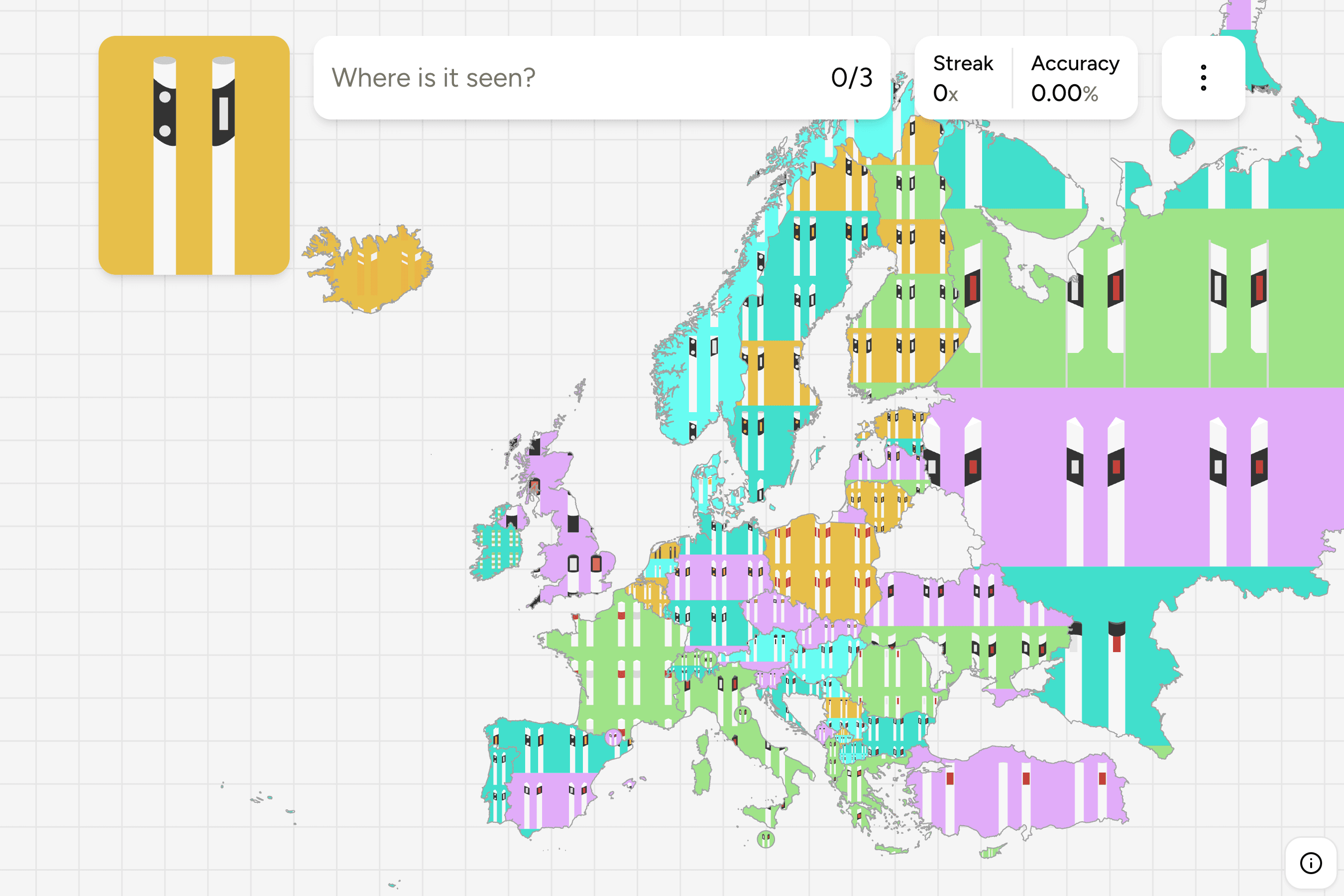
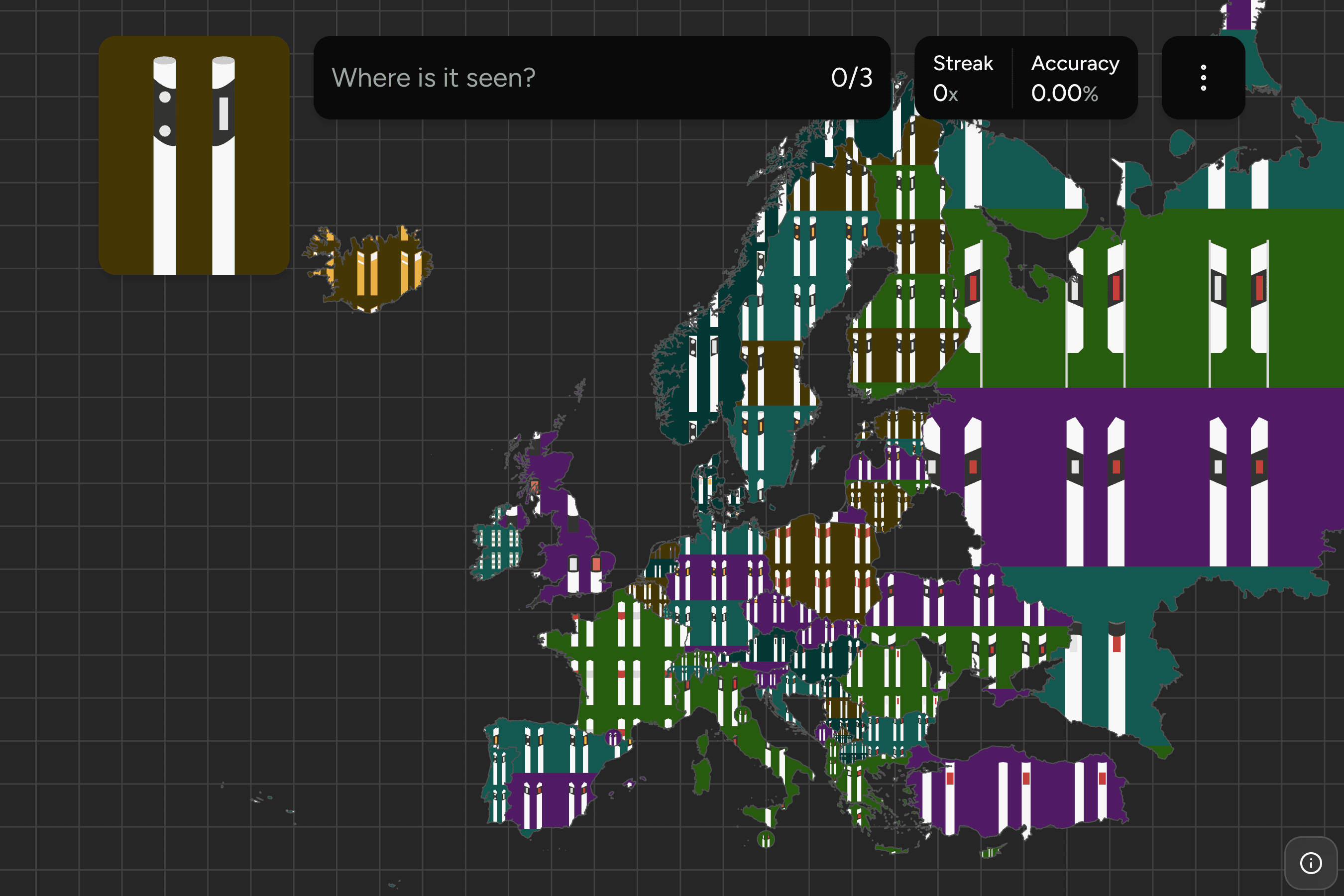
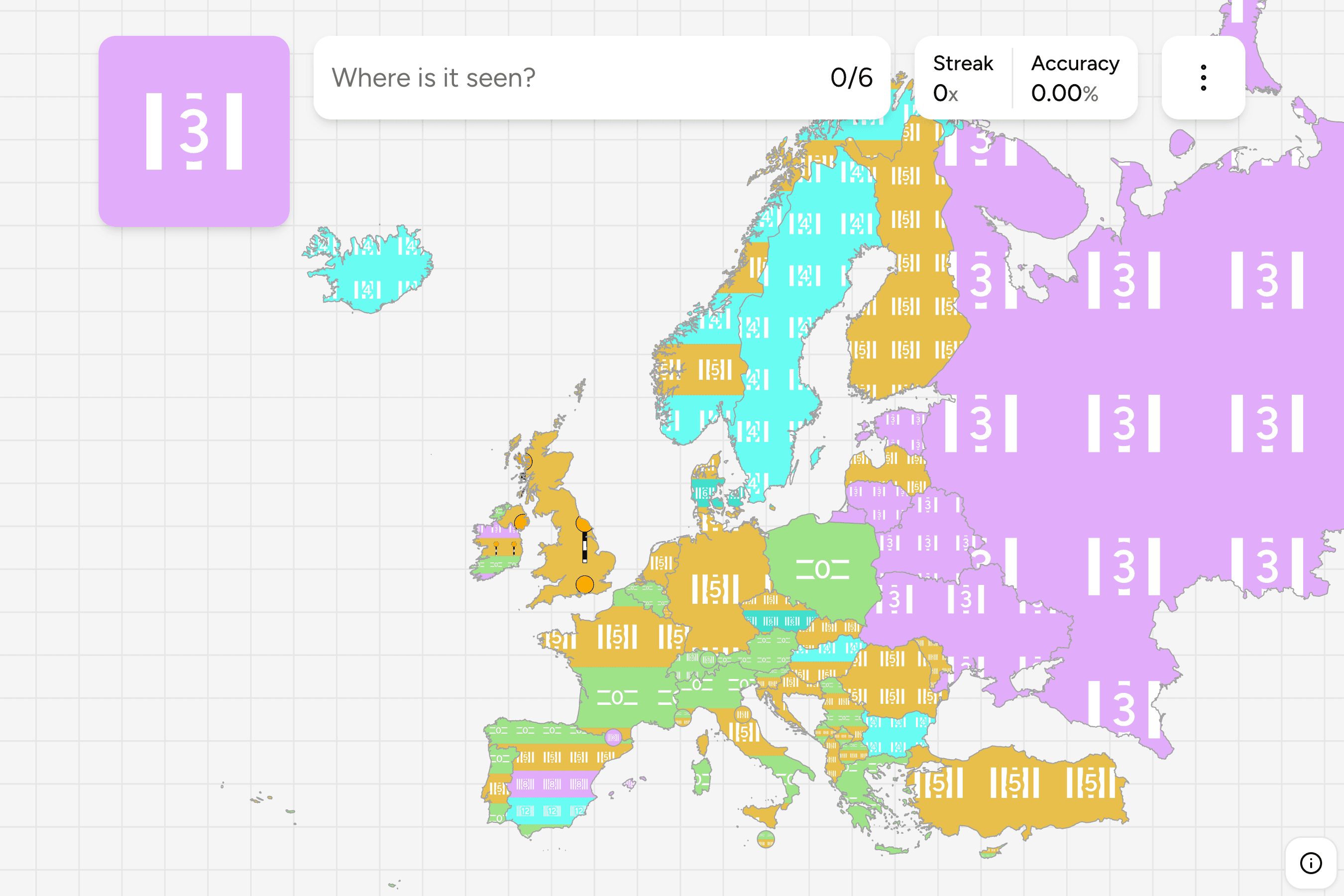
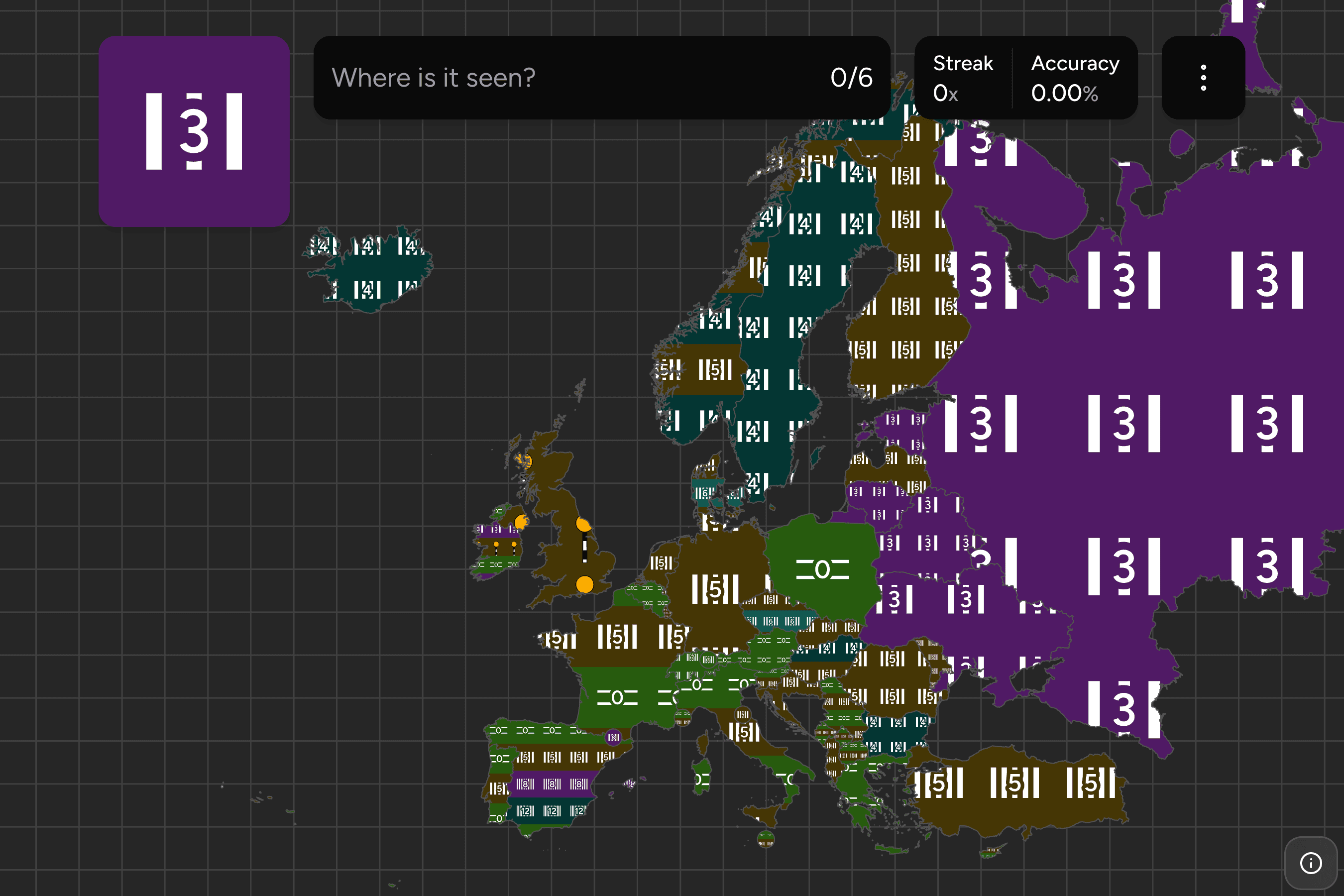
Count the bands on the face. One band with a single rib through the
middle is the A profile. Two bands stacked one above the other is the B.
If you got two bands, you have learned almost nothing, so move on. B is
the default across most of the country.
If you got one band, the map shrinks a long way. The A profile belongs to
the north west and the middle Rhine, and the list below is short enough to be
worth combining with a plate or a phone number.
The failure modes are all about light. Flat overcast light and a rail seen
straight on will hide the shadow that separates the two bands of a B profile and
leave it looking like an A. Fresh snow, road grime and a rail replaced after a
crash all do the same thing. When in doubt, find a second stretch of barrier
further down the road rather than trusting the first one.
One more trap: a state that appears on both lists below is not a state where you
picked the wrong profile. Three of them genuinely run both, usually because the
motorway network and the state's own roads were built to different habits.
Every profile in the game
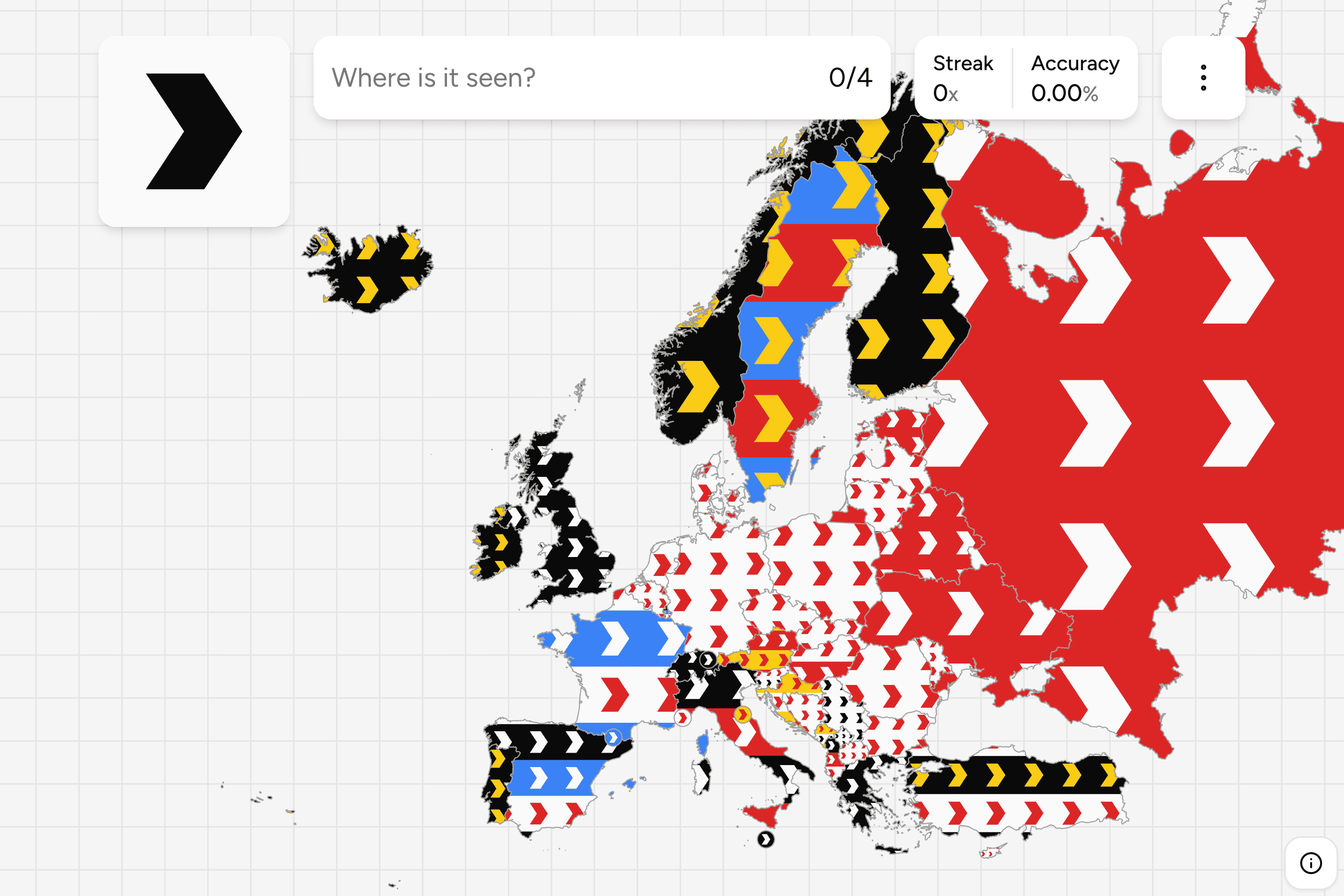
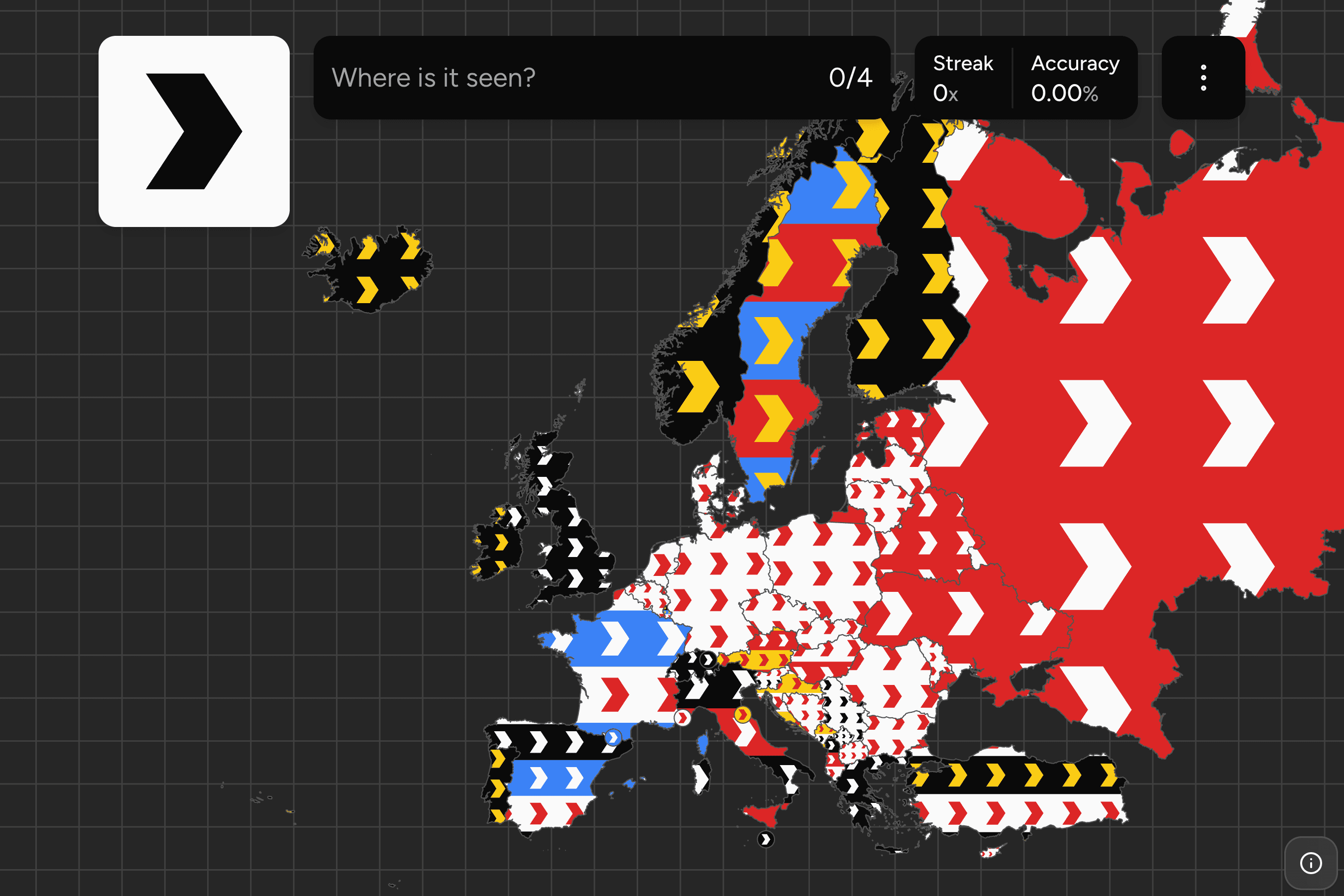
Both profiles, against the states they are seen in. Generated from the game's own data, so it always matches what the game asks.
Profile
Where you see it
Baden-Württemberg, Bavaria, Berlin, Brandenburg, Hesse, Mecklenburg-Vorpommern, North Rhine-Westphalia, Saarland, Saxony, Saxony-Anhalt, Thuringia11 states
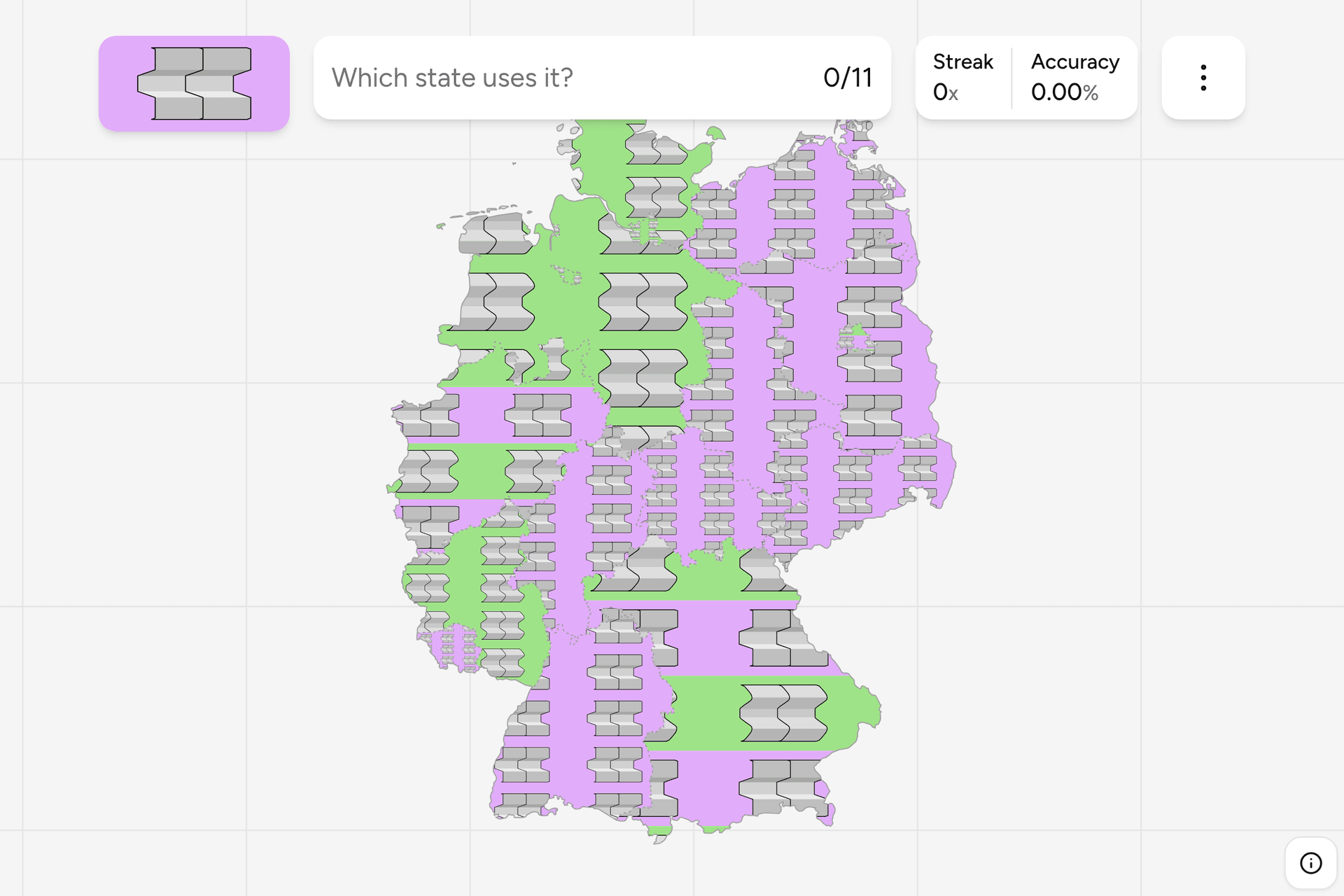
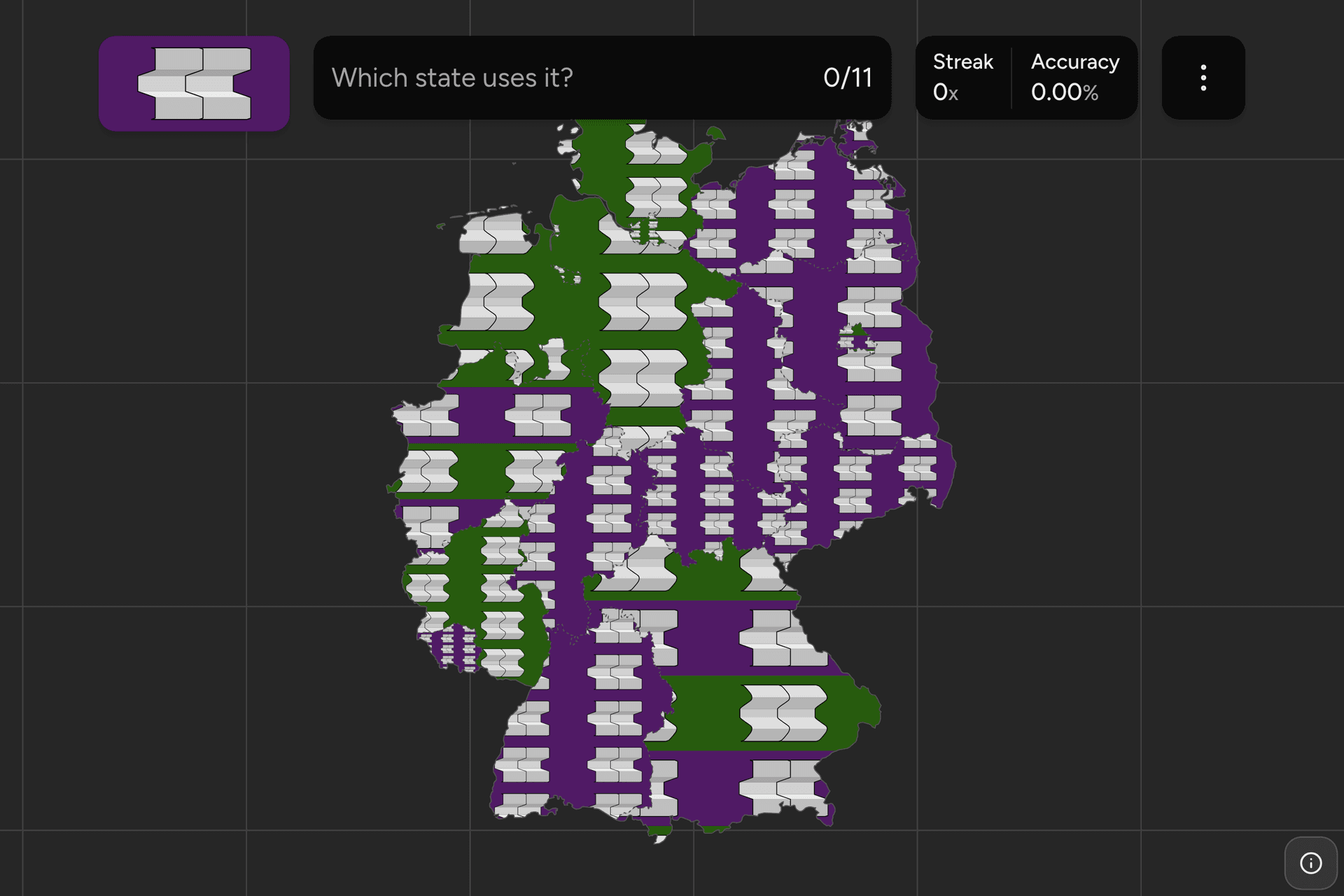
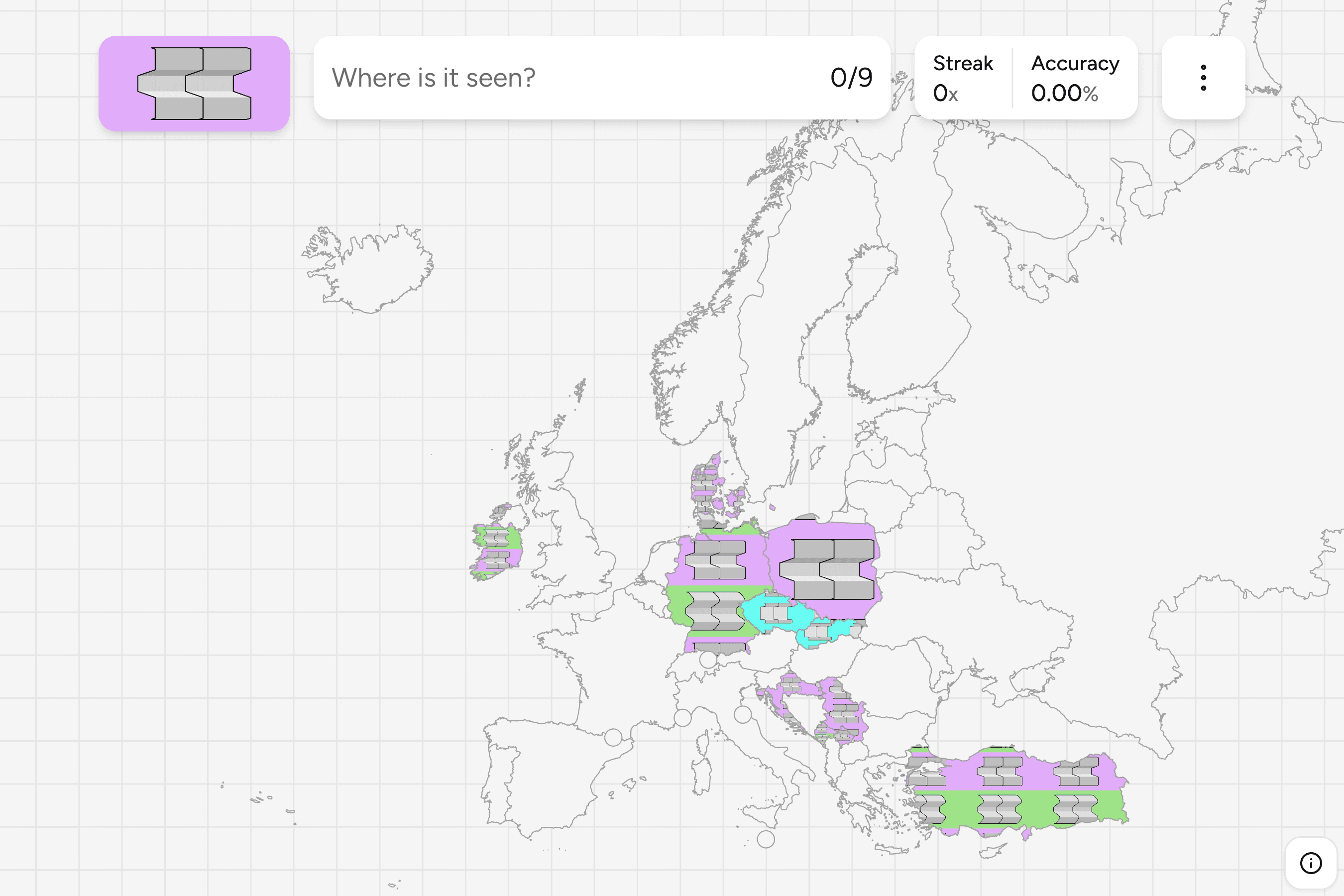
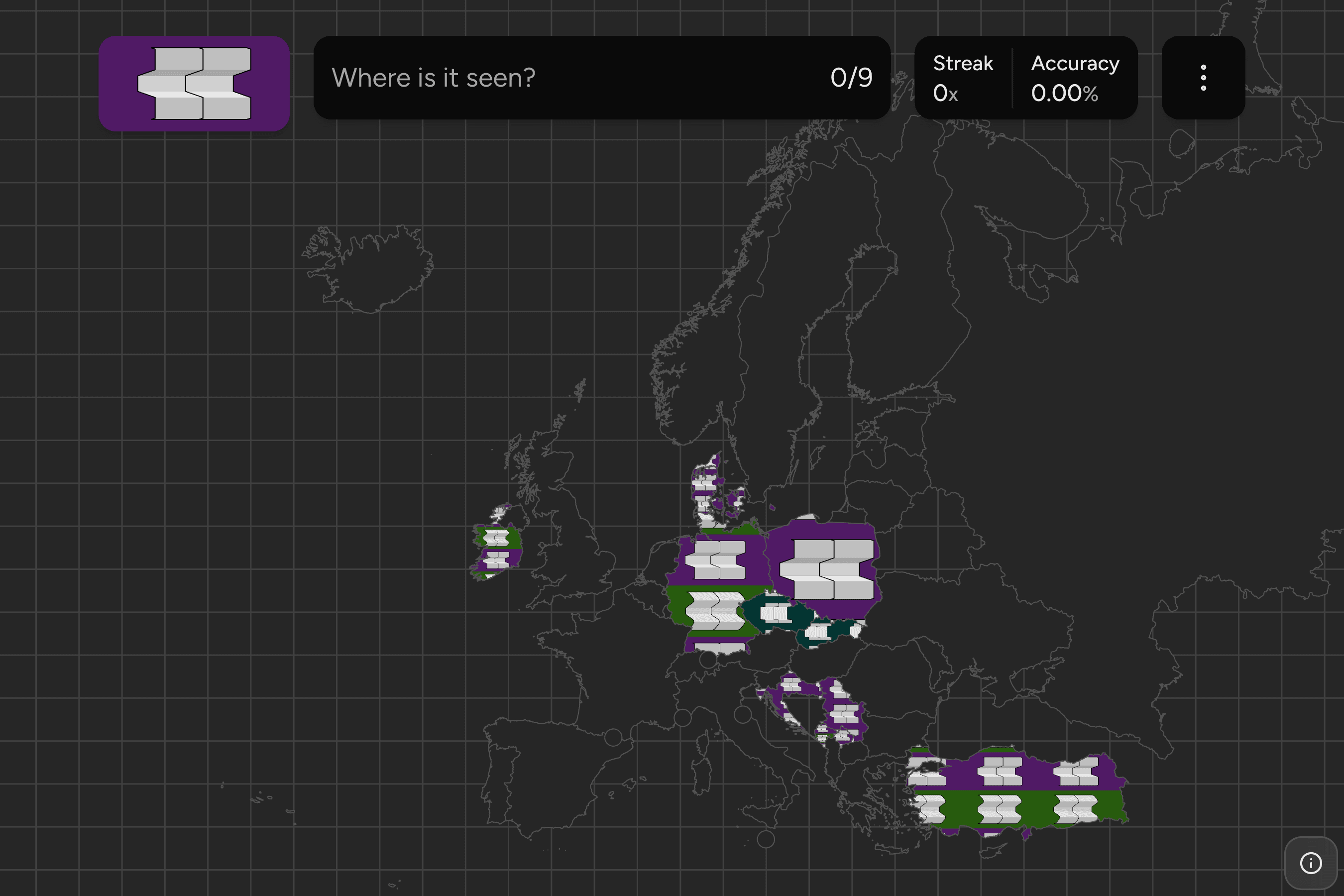
Bavaria, Berlin, Bremen, Hamburg, Lower Saxony, North Rhine-Westphalia, Rhineland-Palatinate, Schleswig-Holstein8 states
States that use both
Bavaria
Berlin
North Rhine-Westphalia
In these three either picture is a correct answer, so the rail narrows Germany
down without settling it. Read something else here: the plate, the street sign
font, the bollard.
Worked examples
One band, with a rib through the middleBavaria, Berlin, Bremen, Hamburg, Lower Saxony, North Rhine-Westphalia, and 2 more
The useful half of this game. A single-band rail is a minority of Germany's
barrier, and the states that build with nothing else form one block in the
north west, from the Dutch border up to Denmark, plus Rhineland-Palatinate on
the middle Rhine. The rest of this list is the states that run both profiles,
where an A rail is possible rather than expected.
Two bands, one above the otherBaden-Württemberg, Bavaria, Berlin, Brandenburg, Hesse, Mecklenburg-Vorpommern, and 5 more
The German default, and a clue before you even get to Germany: most of Europe
builds with the A profile and nothing else, so a two-band rail puts you on a
short list of countries with Germany at the top of it. Inside the country it
rules out the north west block and little else, which is why the picture above
is the one worth chasing.
Frequently asked questions
What is the difference between an A profile and a B profile guardrail?
The shape rolled into the steel beam. The A profile reads as a single band with one rib through the middle. The B profile reads as two bands stacked one above the other, on a rail of the same depth. The two are not compatible, so joining a run of A to a run of B needs a special adapter piece, and that incompatibility is why German states have never converged on one.
Which German states use A profile guardrails?
Rhineland-Palatinate, Schleswig-Holstein, Bremen, Lower Saxony and Hamburg build with the A profile, and it is also in service alongside the B profile in North Rhine-Westphalia, Berlin and Bavaria. Every other state is B only, which works out at roughly four fifths of Germany's barrier by length.
Are German guardrails a good GeoGuessr clue?
Yes, in two steps. The two-band B profile is rare across most of Europe, so seeing one is already a hint that you are in Germany. Once you are in Germany the profile splits the country roughly north west against the rest, which is a genuine region clue in a country where most of the usual clues are national.
Why does the profile change at a state border?
Because road authorities in Germany are run by the states, and each buys the barrier its own standard specifies. Nobody has managed a national agreement, and the cost of adapters between the two profiles means it is cheaper for a state to keep installing whatever it already has than to switch.
What is a Schutzplanke?
Schutzplanke is the German technical term for a crash barrier, and Leitplanke is the everyday word for the same thing. Both refer to the steel beam and post system along the side of a road, which is the object this game asks about.