Polish businesses put their phone number on everything, and the first two digits
of a Polish landline are a place. There are forty nine of those two digit codes,
which sounds like a lot until you notice that they were handed out in a sweep of
the country: the leading digit alone puts you in the right corner of Poland, and
the second one narrows it to a city. This page is the whole plan, and the game
drills it.
- The clue
- Landline area codes
- Where it works
- Shopfronts, vans, roadside advertising
- In the game
- 49 codes
- Covering
- 16 voivodeships
What you are looking at
A Polish landline number is nine digits: a two digit area code and then seven
more, usually written 61 123 45 67 or 61 1234567. Poland dropped the leading
zero from domestic dialling in 2009, so older paint may still show 0 61 where
newer signs show 61, and both mean the same place.
The codes date from the era of the forty nine small voivodeships that Poland was
divided into until 1999, and each one is really the catchment of a single city.
The 1999 reform replaced those forty nine with the sixteen voivodeships the map
in this game shows, but the phone codes were left alone, which is why a modern
voivodeship holds anywhere between one and six of them.
How to read one
- Count the digits in the first group. Two digits then a seven digit
number is a landline, and it has a place attached. Nine digits in three
groups of three is a mobile, and it does not.
- Read the leading digit. That is the corner of the country, and it is the
piece worth learning first, because it is right far more often than a guess
at the map.
- Read the second digit. It picks the city inside that corner of the
country, and it is the half of this clue with no rule behind it. Two codes a
digit apart can be an hour's drive or the width of a province apart, so this
is the part the game is for.
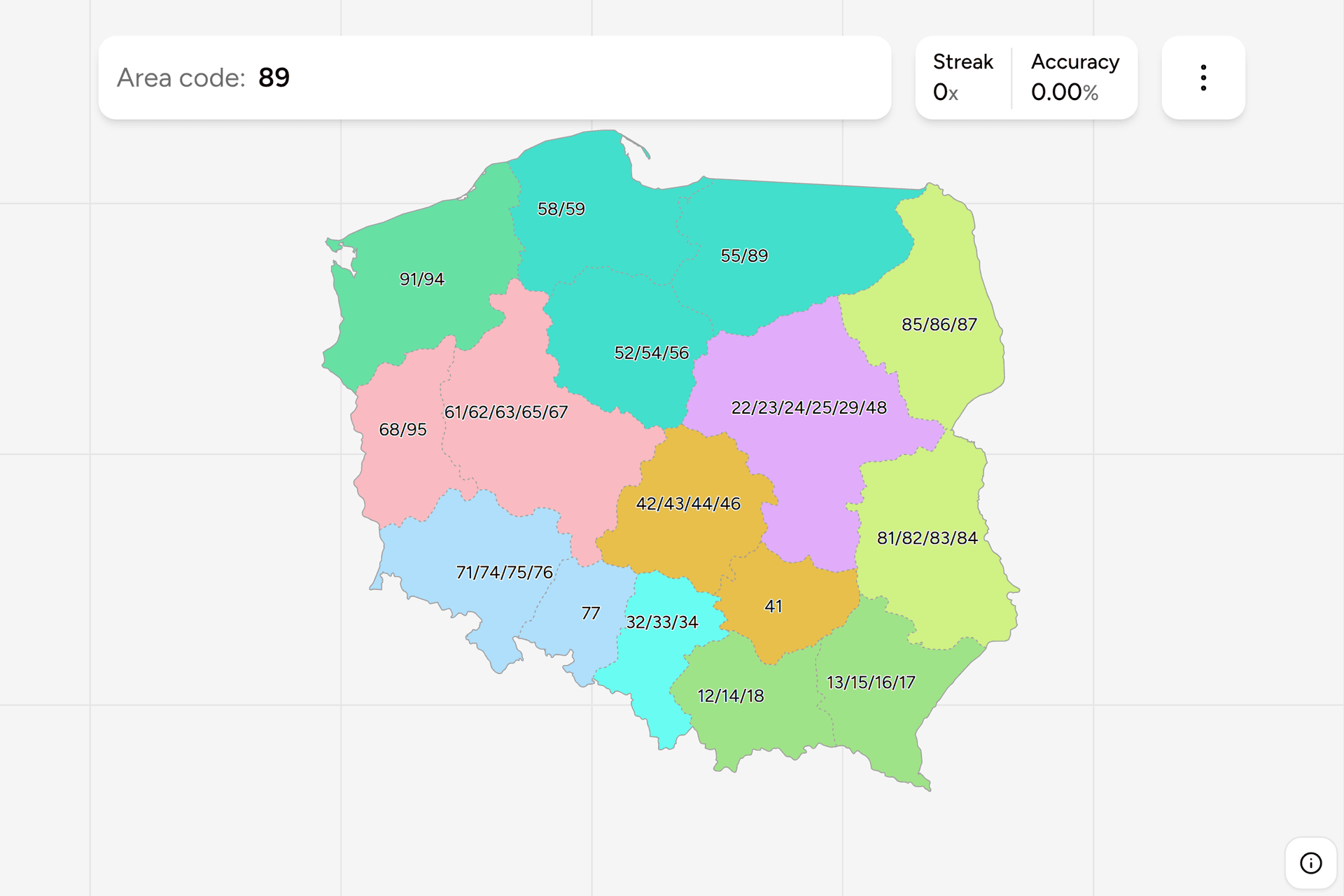
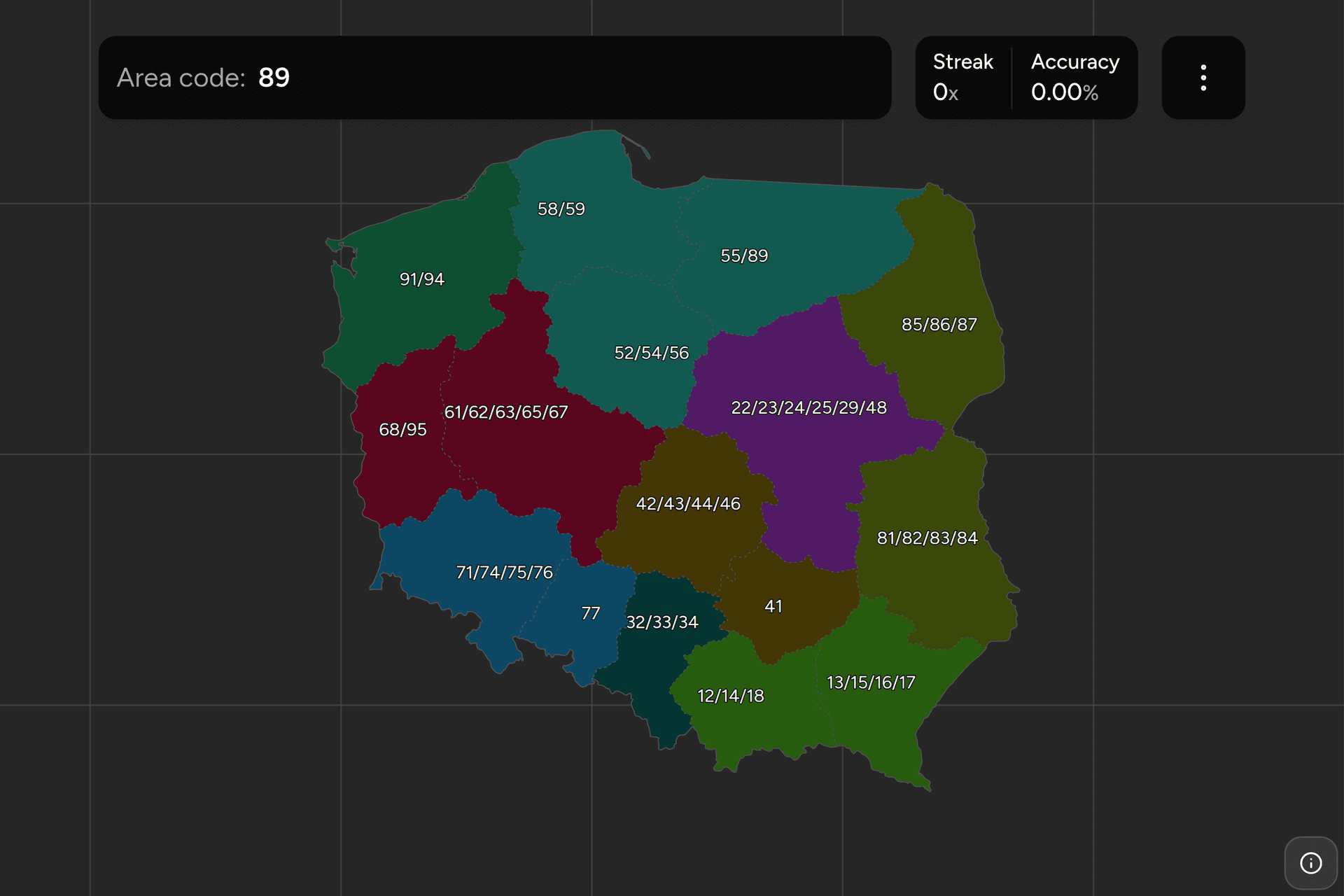
The sweep runs, very roughly, like this: 1 in the far south and south east,
2 across Mazovia around Warsaw, 3 in Silesia, 4 through the centre,
5 along the north and the lower Vistula, 6 in the west, 7 in the
south west, 8 down the eastern border and up to the Masurian lakes, and
9 in the north west. The map in the game is coloured the same way, so the
groups are visible while you play.
The trap is the mobile number. Polish mobiles are also nine digits and some of
them begin with digits that look like an area code, but they are written in
threes and they have no location at all.
Every code, by leading digit
- Starts with 17 codes
- 12, 14, 18, 13, 15, 16, 17
- Starts with 25 codes
- 22, 23, 24, 25, 29
- Starts with 33 codes
- 32, 33, 34
- Starts with 46 codes
- 48, 41, 42, 43, 44, 46
- Starts with 56 codes
- 52, 54, 56, 55, 58, 59
- Starts with 66 codes
- 61, 62, 63, 65, 67, 68
- Starts with 75 codes
- 71, 74, 75, 76, 77
- Starts with 88 codes
- 89, 81, 82, 83, 84, 85, 86, 87
- Starts with 93 codes
- 95, 91, 94
Each of those groups can be played on its own from the game's start dialog,
which is the sane way to learn forty nine numbers: one corner of the country at
a time, until the leading digit is automatic.
Worked examples
22The one you know22/23/24/25/29/48Warsaw. The line under this example is the rest of Mazovia, and it is a useful
thing to see: the province around the capital carries more codes than any
other, so a 2 read on its own is worth a guess somewhere in the middle of
the country rather than in the city itself.
12The far south12/14/18Krakow. Everything in the 1 group is in the mountains or the foothills along
the southern border, and the low number tells you this is the largest city in
that group. A half read code starting with a 1 is worth a guess a long way
south of where the pin would otherwise land.
58The coast58/59Gdansk and the Tricity. The 5 group runs along the north, and it is the one
worth learning as a block, because the Baltic coast is where a wrong guess
costs the most: there is nothing but sea to the north of it to correct you.
Frequently asked questions
How many digits is a Polish phone number?
Nine. A landline is a two digit area code followed by a seven digit subscriber number, and a mobile is nine digits with no area code at all. Dialled from abroad both take the country code 48 in front, with no leading zero.
What is the area code for Warsaw?
22. It is the code with the largest population behind it, so it is also the one that turns up most often on national advertising rather than on a local shopfront, which is worth remembering before you drop a pin on the capital.
Why does Poland have so many area codes?
Because they were drawn around the forty nine small voivodeships that existed before 1999, each one built around a single city. The administrative map was redrawn into sixteen larger voivodeships, but the numbering was not, so the old divisions survive in the phone book.
Do Polish numbers still start with a zero?
Not since 2009, when domestic dialling switched to the full nine digit number. Older signs, vehicle livery and painted walls often still carry the zero in front of the area code, and it means exactly the same thing.
How do you tell a Polish mobile from a landline?
By how the digits are grouped. A landline splits as two then seven, so the first group on the sign is short. A mobile splits into three groups of three. Only the landline carries a location.
Where do you see phone numbers in Polish Street View?
On shopfronts and workshop signage, on the side of vans, and on the roadside advertising boards that line approaches to towns. Poland advertises with phone numbers heavily, which is what makes this clue worth training.
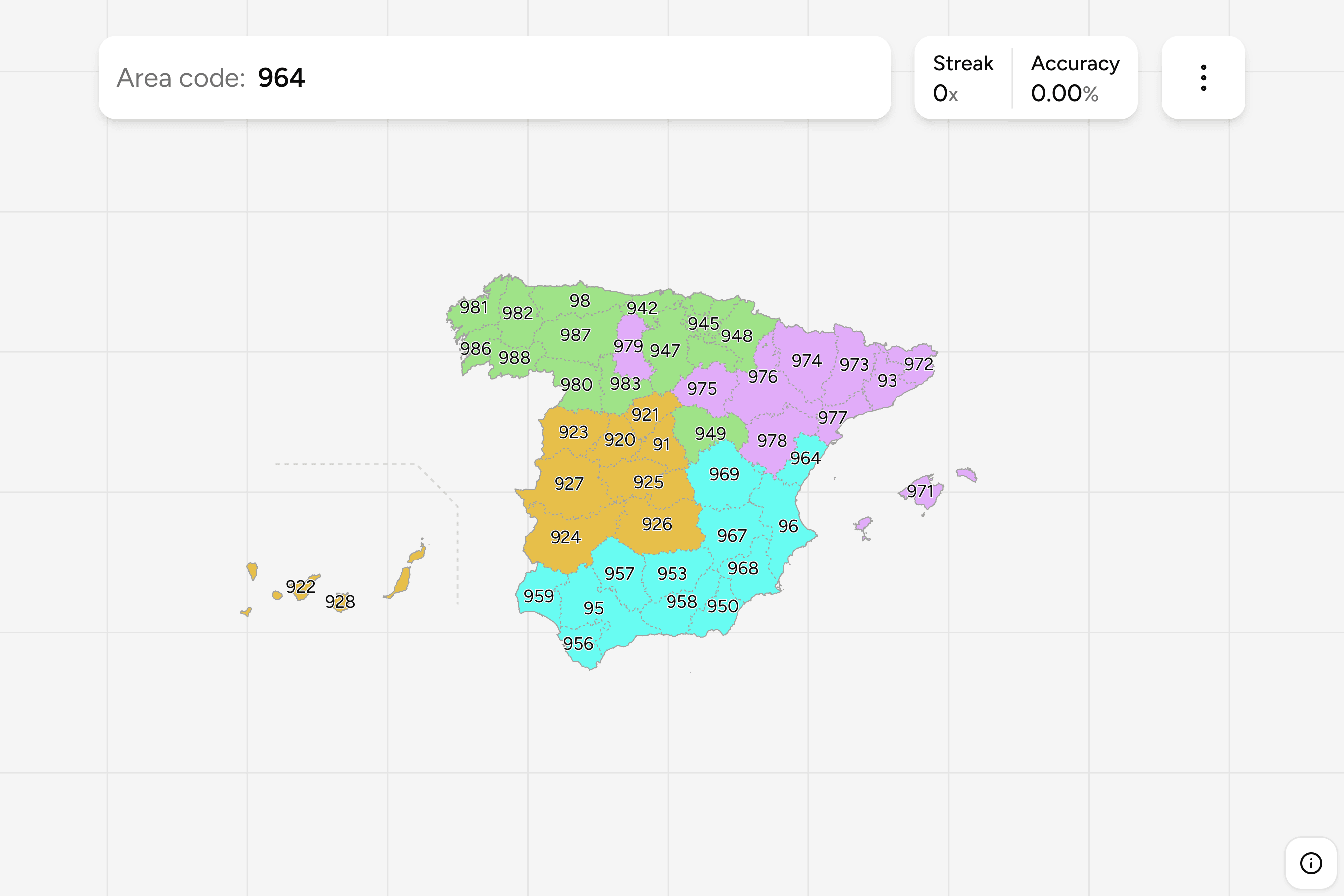
Poland rewards the same habit the Spanish codes do:
learn the leading digit first, then the cities. The
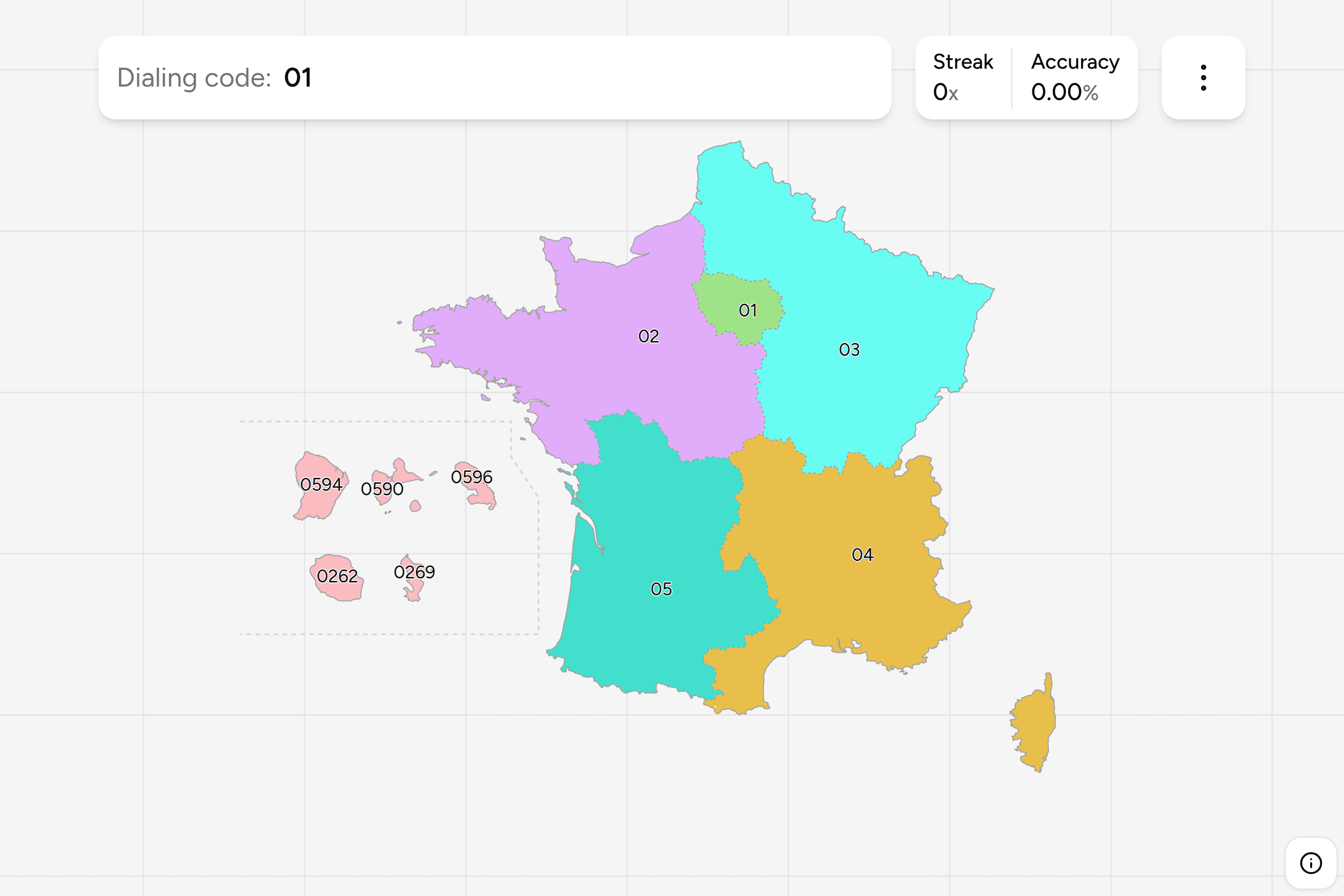
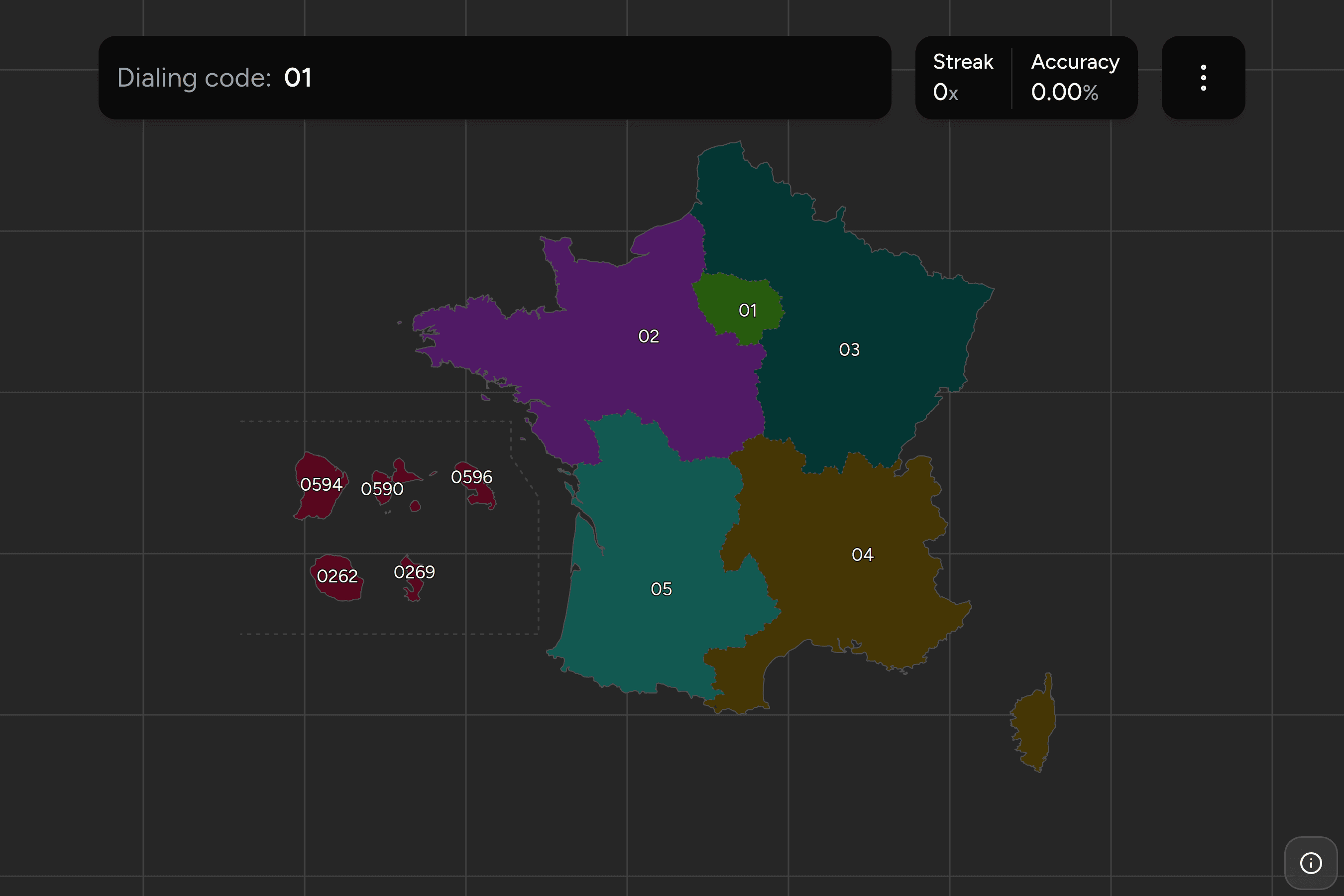
French zones are a gentler version of the same idea.
Sources