A three digit area code on a Canadian van is one of the few clues that will
separate Canada from the United States and then tell you which province you are
in, both from the same three digits. There is no pattern in the numbers to help
you, which is exactly why it is worth learning them: nobody works these out, so
the player who knows them is ahead. This page is the whole list, and the game
drills it.
- The clue
- NANP area codes
- Where it works
- Vans, storefronts, for sale signs
- In the game
- 20 codes
- Covering
- 10 regions
What you are looking at
Canada shares the North American Numbering Plan with the United States, so a
Canadian number looks exactly like an American one: a three digit area code and
a seven digit number, written (604) 555 0123 or 604-555-0123. There is no
country code to tell them apart, because both are +1.
That is what makes the area code worth memorising. Nothing else about the
formatting differs, so the code is the only part of a phone number on a sign
that says which side of the border you are on.
Unlike the Brazilian or Mexican plans, the digits carry no geography. Codes were
handed out in 1947 and then whenever a region ran out of numbers, so 204 and
250 are three thousand kilometres apart while 403 and 416 are nearly as
far. There is nothing to derive. There is only recall, and the map.
How to read one
- Check it is three digits followed by seven. That is the North American
plan, so the number is in Canada, the United States, or one of the Caribbean
members. Anything else is another country.
- Read the code. It is the answer on its own. Provinces do not share codes
with each other, with two exceptions, and neither exception crosses a region
you would confuse.
- Ignore the overlays. Where a numbering area ran out of numbers a second
code was laid over exactly the same ground, so
647 means what 416 means
and 778 means what 604 and 250 mean. The game asks for the original
code of each area, and an overlay is a second name for the same answer.
The failure mode is the toll free number. Anything beginning 800, 833,
844, 855, 866, 877 or 888 is national and free to call, and it says
nothing about where the business is. It is also the number a company is most
likely to paint on a truck, so it is a common way to waste a good clue.
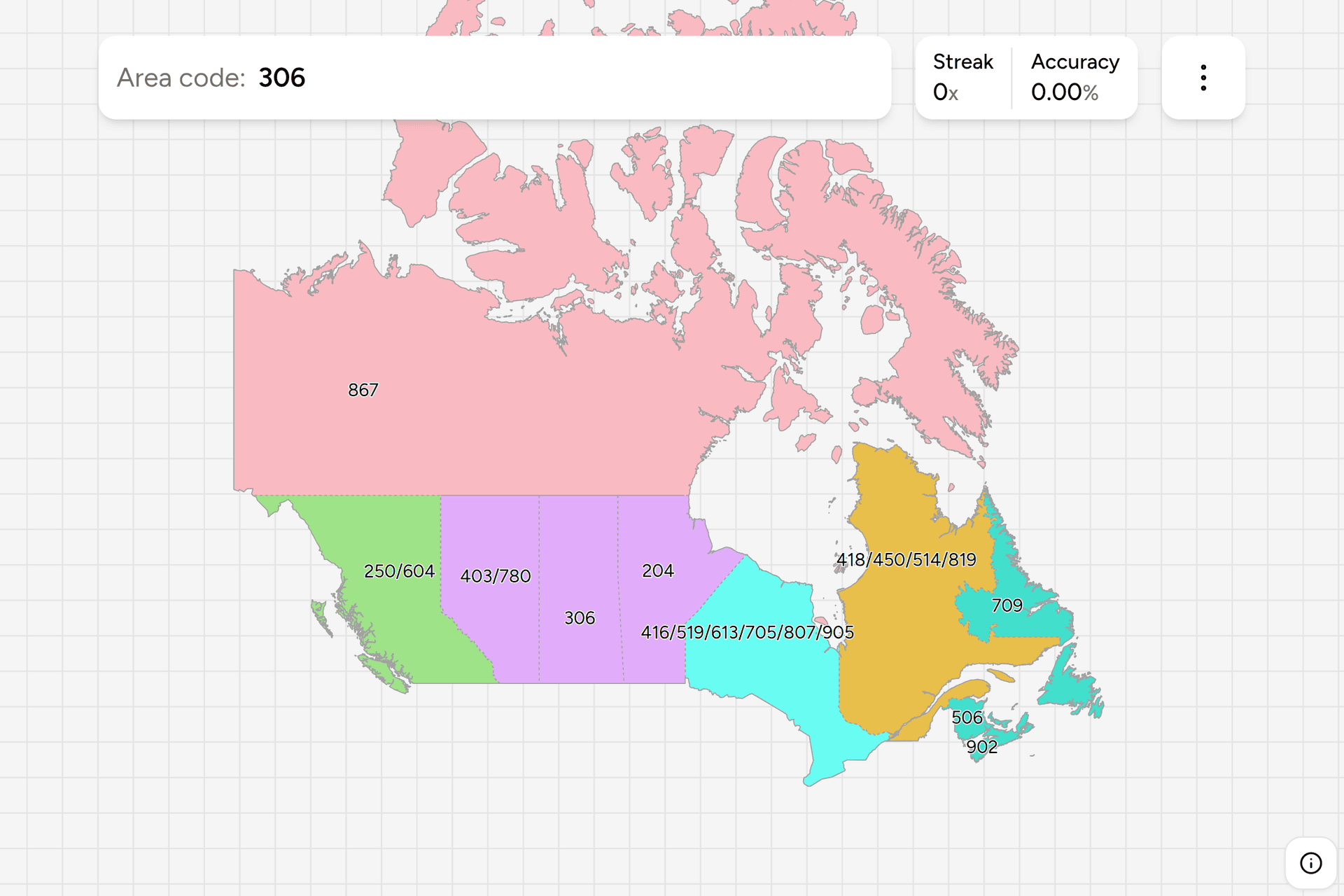
Every code, by region
- British Columbia2 codes
- 250, 604
- The Prairies4 codes
- 204, 306, 403, 780
- Ontario6 codes
- 416, 519, 613, 705, 807, 905
- Quebec4 codes
- 418, 450, 514, 819
- Atlantic Canada3 codes
- 506, 709, 902
- The territories1 code
- 867
Each of those groups can be played on its own from the game's start dialog. The
Atlantic and the Prairies are the two worth starting with: between them they
cover most of the width of the country with a handful of codes that each answer
for one province and nothing else.
Worked examples
867The whole ArcticOne code for Yukon, the Northwest Territories and Nunavut, which is close to
forty percent of Canada's land area and well under one percent of its people.
If you see it, you are north of sixty, and the only question left is which of
the three you are standing in.
902Two provincesNova Scotia and Prince Edward Island together. The Maritimes are the corner of
the country where the provinces are small enough to share, so this is the one
Canadian code that leaves you a real choice. Everything else on the island is
the tiebreak: red soil, and a road network with no divided highway on it.
416Toronto416/519/613/705/807/905The City of Toronto and nothing else. The line under this example is the rest
of Ontario, and it shows the problem the province has: Ontario alone carries
as many codes as the four western provinces put together, so within Ontario
the code is a city rather than a province.
Frequently asked questions
How many digits is a Canadian phone number?
Ten, area code included, and ten digit dialling is now the norm across the country. The country code is 1, shared with the United States, so an international number looks identical to an American one apart from the area code itself.
Can you tell Canada from the United States by the phone number?
Only by the area code. The format is identical and the country code is the same, so there is no shortcut: the three digits either belong to a Canadian numbering area or they do not, and knowing which is the whole skill.
What is an overlay area code?
A second area code covering exactly the same ground as an existing one, added when the first ran out of numbers. Toronto, Montreal, Vancouver, Calgary and Edmonton all have them. An overlay is not a new place, which is why this game asks for the original code of each area rather than every code in service.
Which Canadian area code covers the territories?
One code covers all three of them, Yukon, the Northwest Territories and Nunavut, from the Alaskan border to Baffin Island. It is the largest area any single code in the plan is responsible for.
Which Canadian area codes are worth learning first?
The single code provinces, because each of them is a complete answer with no follow up: Manitoba, Saskatchewan, New Brunswick and Newfoundland and Labrador have one apiece, and Nova Scotia and Prince Edward Island share one. That is a third of the country learned in five numbers.
Where do you see phone numbers in Canadian Street View?
Commercial vehicle livery is the most reliable, followed by storefront signage, real estate boards and the contractor signs outside building sites. Watch for a toll free number, which looks the same on the van and means nothing.
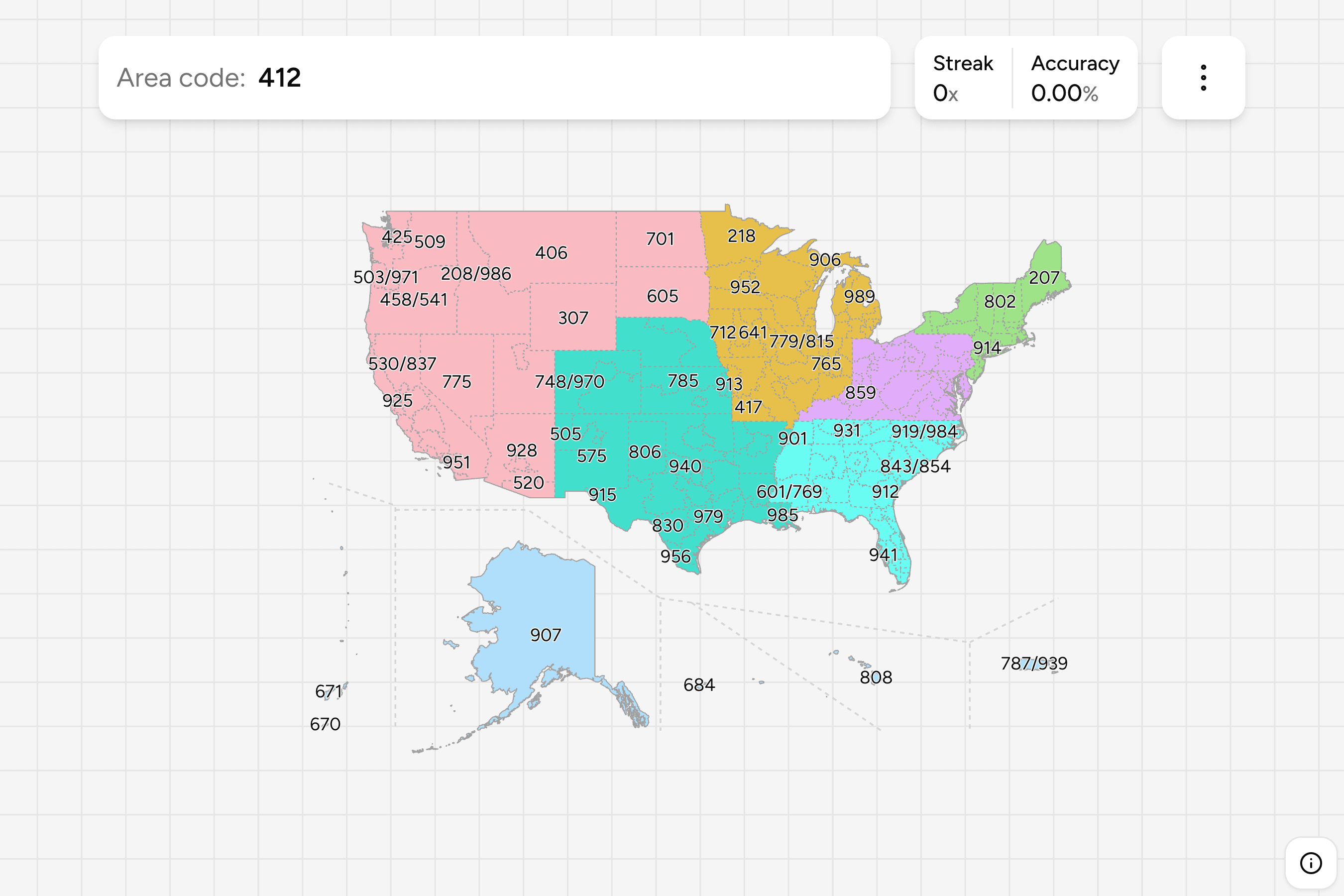
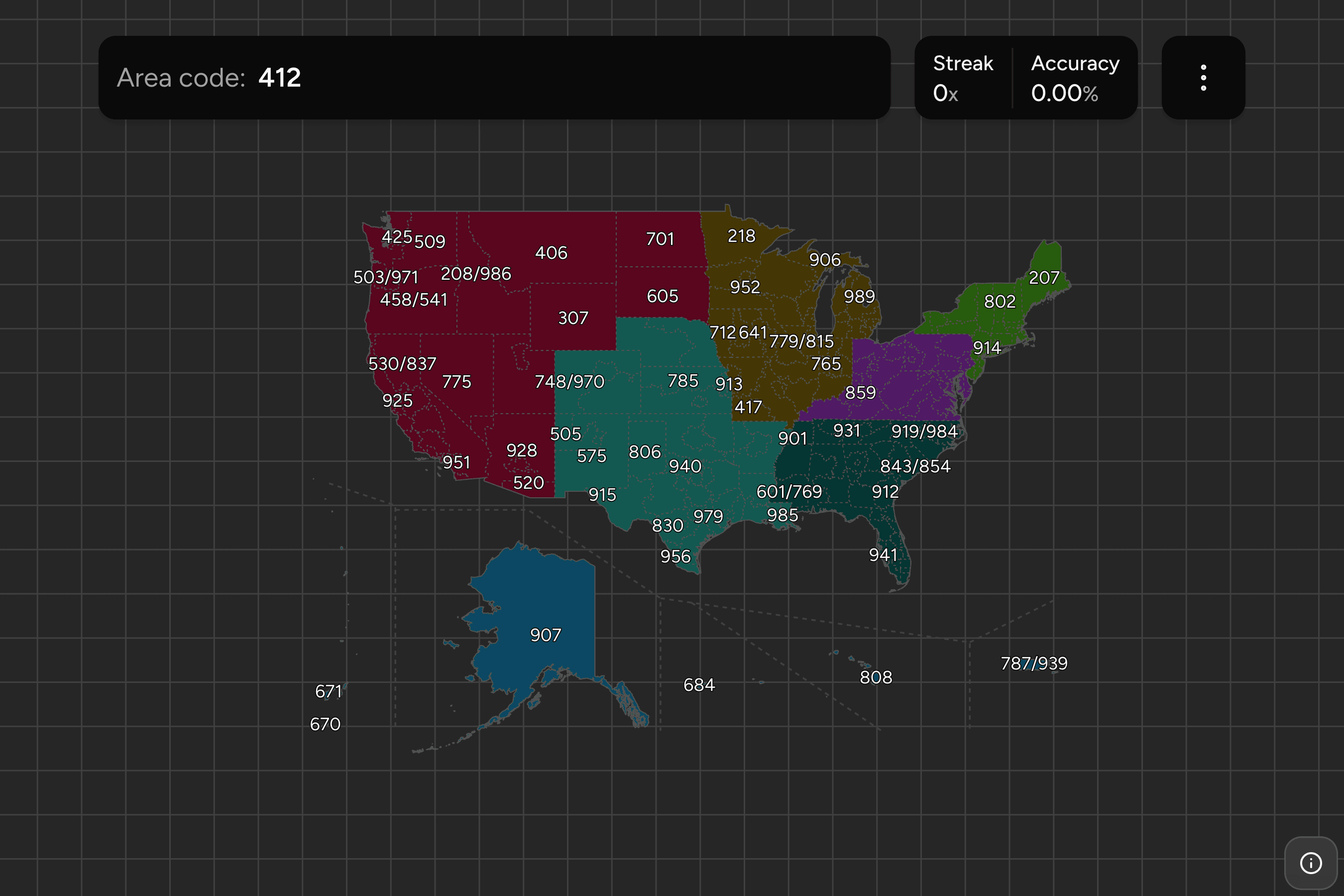
The American codes are the other half of this plan and the
game to play next, since the two share a numbering scheme and a border. The
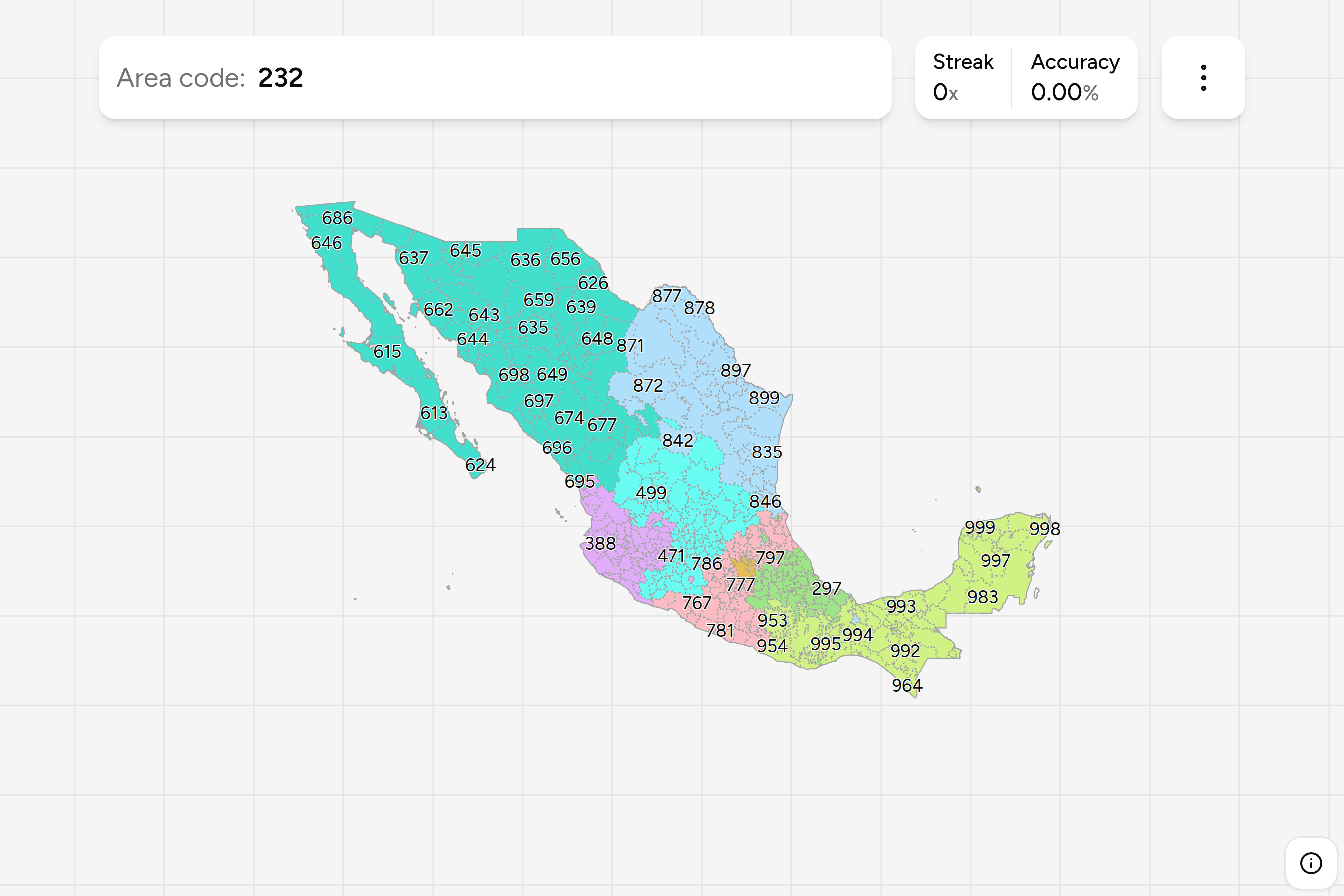
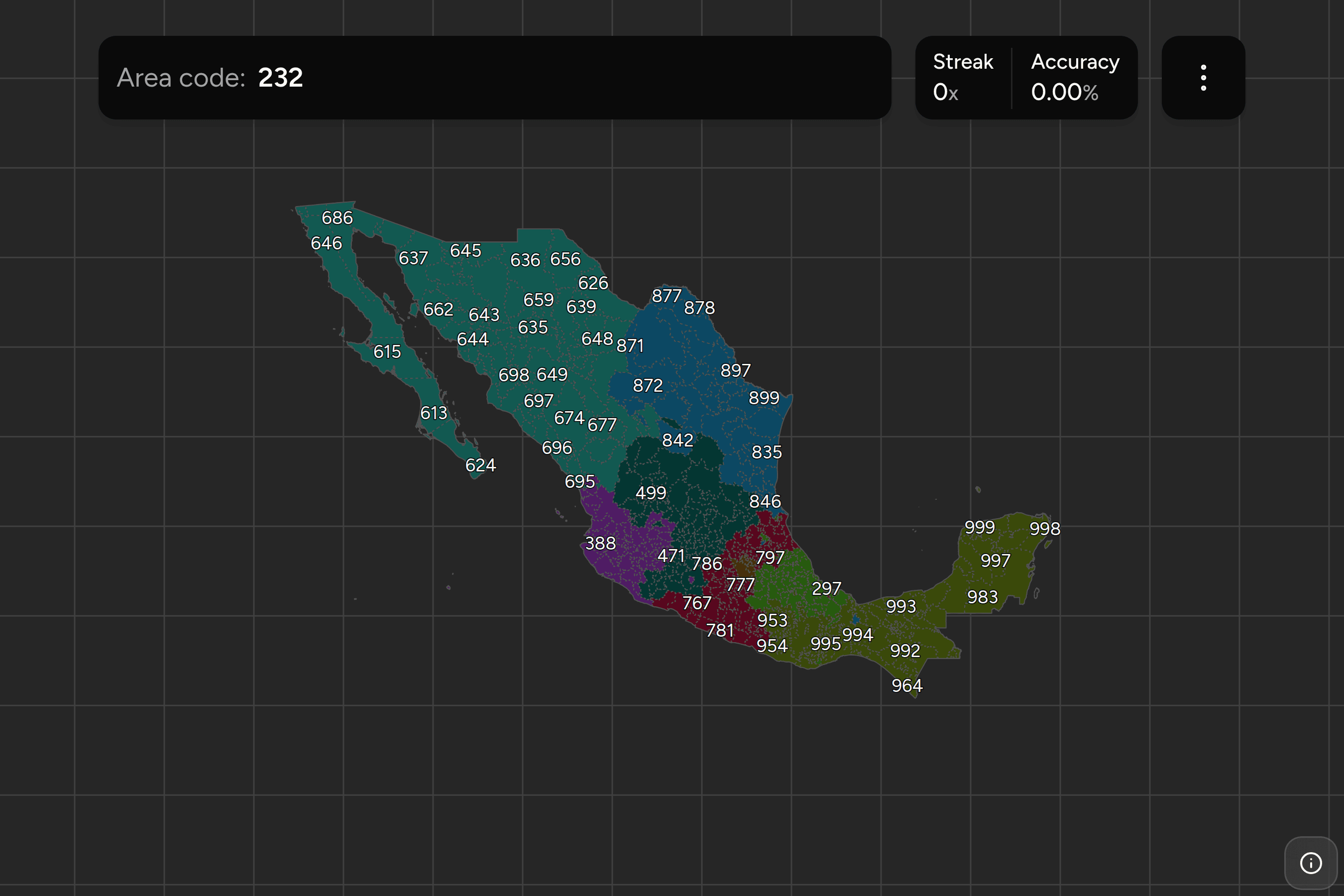
Mexican codes complete the continent.
Sources