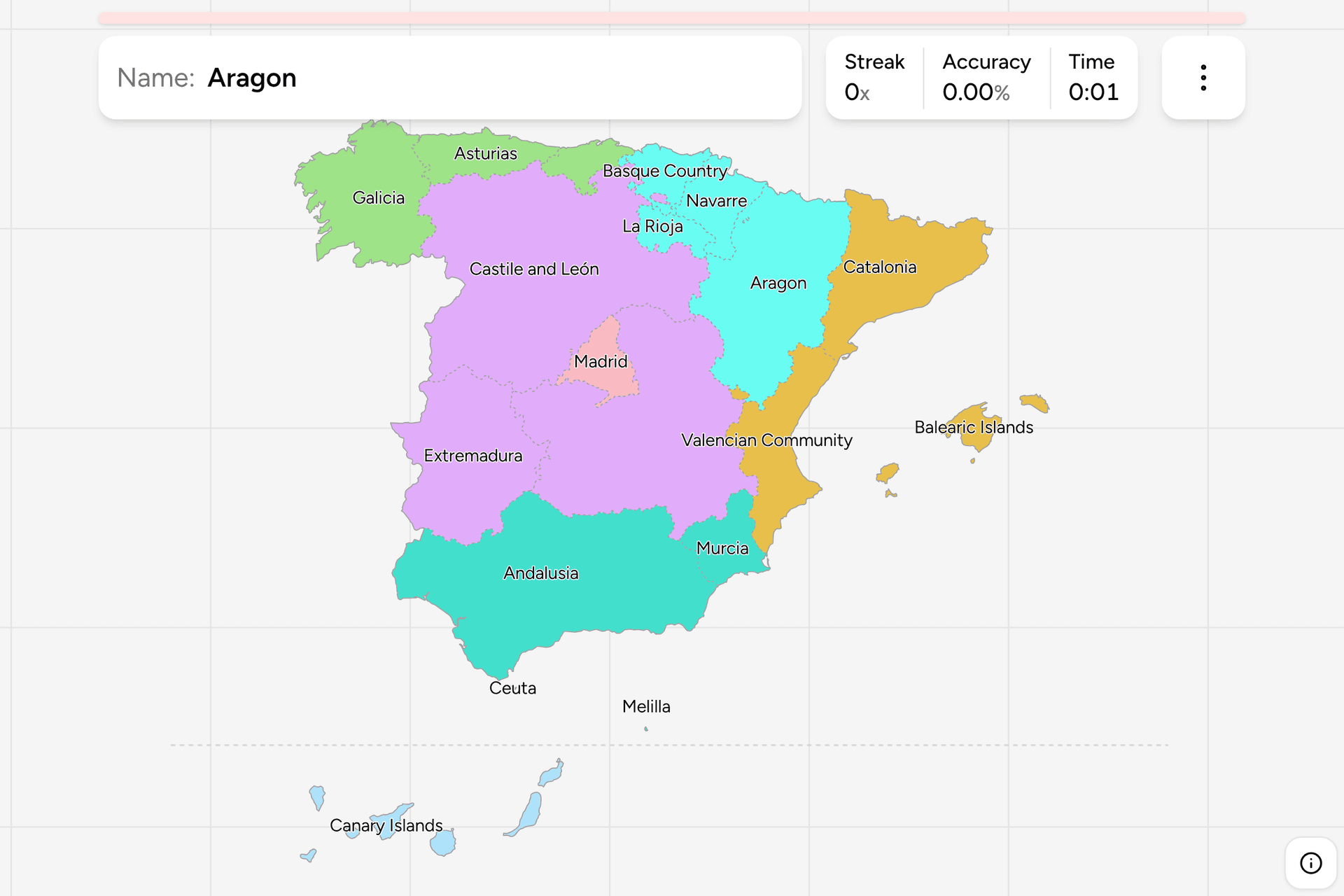
Spain is governed in two layers that most visitors only half see: the
provinces, which date from 1833 and are what postcodes and phone numbers
follow, and the autonomous communities above them, which are what a Spaniard
means by where they are from and which run the hospitals, the schools and in
several cases the police. This page is the whole set of communities, and the
game asks you to put each name where it belongs, in English or the way it is
written at home.
- The quiz
- Name to place, on the map
- Names
- English or as written in Spain
- In the game
- 19 communities
What you are looking at
The communities were built after Franco, out of the 1978 constitution, which
let any group of neighbouring provinces apply to become one. Catalonia, the
Basque Country and Galicia, the three with their own languages and a
recent history of self-government, went first, and by 1983 every province in
the country had joined one. The result is seventeen communities and, on the
African coast, the two autonomous cities of Ceuta and Melilla, which hold a
status of their own and sit in this game alongside the seventeen.
The map is not even. Castile and León is larger than Portugal and has nine
provinces; La Rioja is a single valley and has one. Seven communities are a
single province wearing two hats: Asturias, Cantabria, La Rioja, Madrid,
Murcia, Navarre and the Balearic Islands. For those the community and the
province are the same shape, so learning one gives you the other for free.
Two of them, the Basque Country and Navarre, collect their own taxes under
regimes that predate the constitution, which is why they are the two with the
most unusual relationship to Madrid. The Canary Islands are the only
community drawn somewhere other than where it is: a thousand kilometres
southwest of the mainland, off the Sahara, they are moved up into the empty sea
below Andalusia on this map and fenced off with a line.
How to place one
- Start with the corners. Galicia is the northwest, Catalonia the northeast,
Andalusia the south, and Extremadura the west against Portugal. Four names
and about half the map.
- Fill the north coast. West to east it runs Galicia, Asturias, Cantabria,
the Basque Country, then Navarre reaching down toward the Ebro.
- Add the Ebro valley. La Rioja is the small one on the river, and Aragon
is the long column between Navarre and Catalonia.
- The Mediterranean strip. Catalonia, then the Valencian Community, then
Murcia, then Andalusia again. The Balearic Islands sit off that coast.
- The middle. Castile and León is the big block in the northwest of the
plateau, Castile-La Mancha the one south and east of it, and Madrid is the
small one in the centre, completely surrounded by Castile-La Mancha and
Castile and León.
The two traps are names, not shapes. Castile and León and Castile-La Mancha
differ by one word and are neighbours, and the way out is that León is
the northern one, in the corner next to Galicia and Asturias. And Ceuta and
Melilla are drawn at the size of a pinprick on a map of the whole country:
look for them on the African side of the strait, one at its western mouth and
one a long way east.
Every community, by region
- Northwest3 communities
- Galicia, Asturias, Cantabria
- Centre3 communities
- Castile and León (Castilla y León), Castile-La Mancha (Castilla-La Mancha), Extremadura
- Northeast4 communities
- Basque Country (País Vasco), Navarre (Navarra), La Rioja, Aragon (Aragón)
- East3 communities
- Catalonia (Catalunya), Valencian Community (Comunitat Valenciana), Balearic Islands (Illes Balears)
- South4 communities
- Andalusia (Andalucía), Murcia, Ceuta, Melilla
- Madrid1 community
- Madrid
- Canary Islands1 community
- Canary Islands (Canarias)
These seven groups are the NUTS 1 regions that Spain and Eurostat publish
their statistics in. They are made of whole communities, so none is split, and
they are the same seven groups the provinces game uses. Each can be played on
its own from the start dialog, so the Canary Islands are a one question drill
and the Northeast is a real one.
The name in brackets is the community as it is written in Spain, which is
what the game shows if you turn on the local name in the start dialog.
Where it differs it is because the community has a second official language:
Catalunya, Illes Balears, Canarias and Comunitat Valenciana are the legal
forms.
Worked examples
MadridThe one in the middleMadrid is a community with one province and almost no outline of its own: it
is the small shape in the dead centre of the plateau, entirely enclosed by
Castile and León to the north and Castile-La Mancha to the south and east.
Its one province was part of New Castile until 1983, and it became a
community of its own rather than joining Castile-La Mancha, which is why the
capital is not inside either of its neighbours.
CeutaAcross the straitCeuta is a Spanish city on the African side of the Strait of Gibraltar, about
eighteen square kilometres, and an autonomous city rather than part of any
community. On the map it is the tiny shape opposite Gibraltar, one of the two
that have a tap area added so a finger can actually land on them.
Canary IslandsThe islands in the boxTwo provinces, Las Palmas and Santa Cruz de Tenerife, make up the Canary
Islands, and as a community they are one answer. The archipelago is moved up
into the sea below Andalusia on this map, which costs the mainland nothing
and lets it be drawn as large as the window can hold it.
Frequently asked questions
How many autonomous communities does Spain have?
17, plus two autonomous cities, Ceuta and Melilla, which are counted alongside them in this game for 19 in all.
What is the difference between a province and an autonomous community in Spain?
The community is the government and the province is the older administrative division underneath it. Communities hold real power over health, education and much else, and each is made of one or more whole provinces. There are 50 provinces. Seven communities consist of a single province: Asturias, Cantabria, La Rioja, Madrid, Murcia, Navarre and the Balearic Islands.
Which is the largest community, and which the smallest?
Castile and León is the largest by area, at about 94,000 square kilometres, and Andalusia the most populous. Of the 17 communities, La Rioja is the smallest by both measures. The two autonomous cities are far smaller still: Ceuta covers under twenty square kilometres and Melilla about twelve.
Why are Ceuta and Melilla not communities?
They were Spanish cities long before the communities existed and are too small to be a region of their own, so they were granted autonomous city status in 1995 instead, with a city council that has some of the powers of a community.
Which communities have their own language?
Catalonia, the Balearic Islands and the Valencian Community have Catalan (called Valencian in the last), Galicia has Galician, and the Basque Country and part of Navarre have Basque. Spanish is official everywhere.
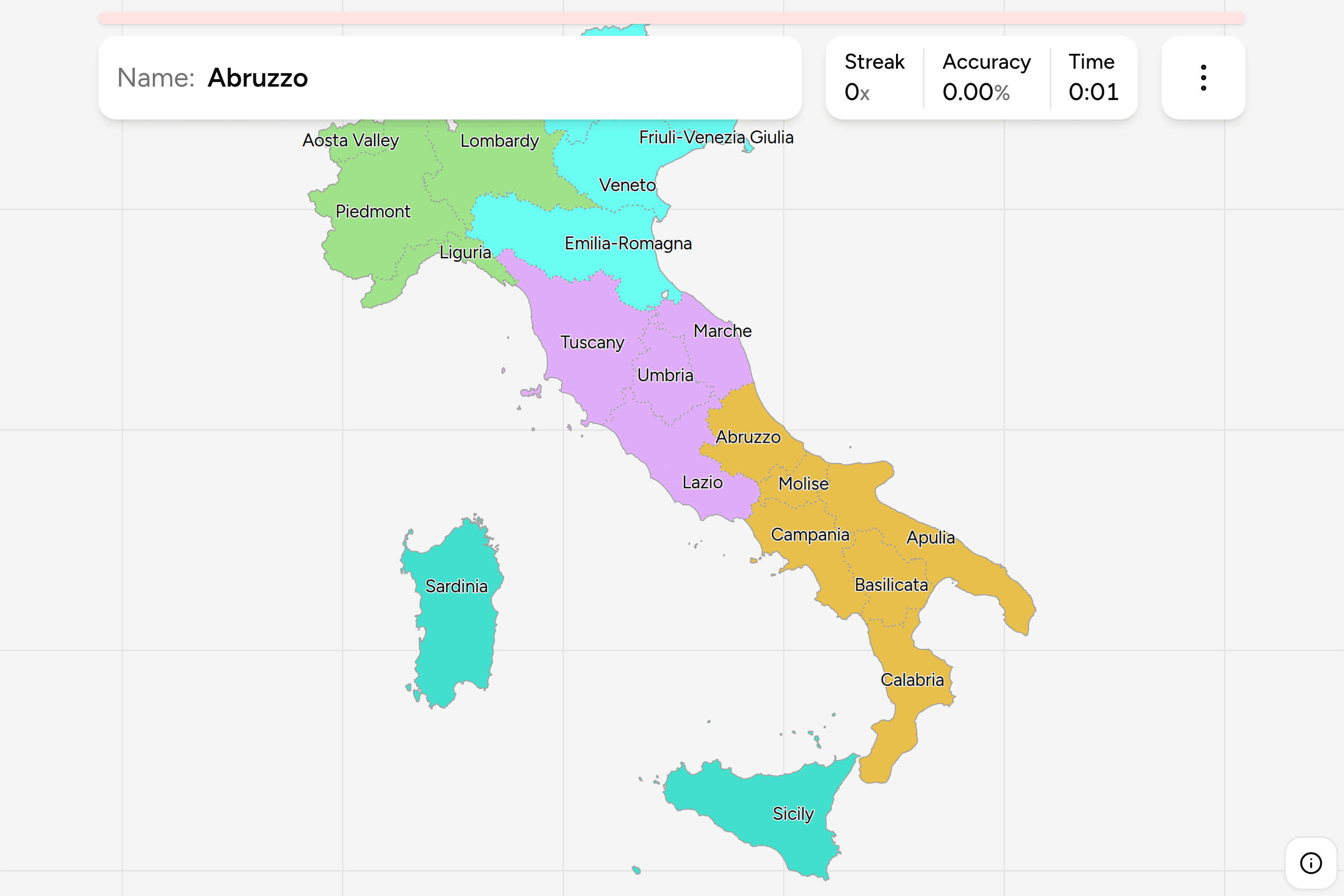
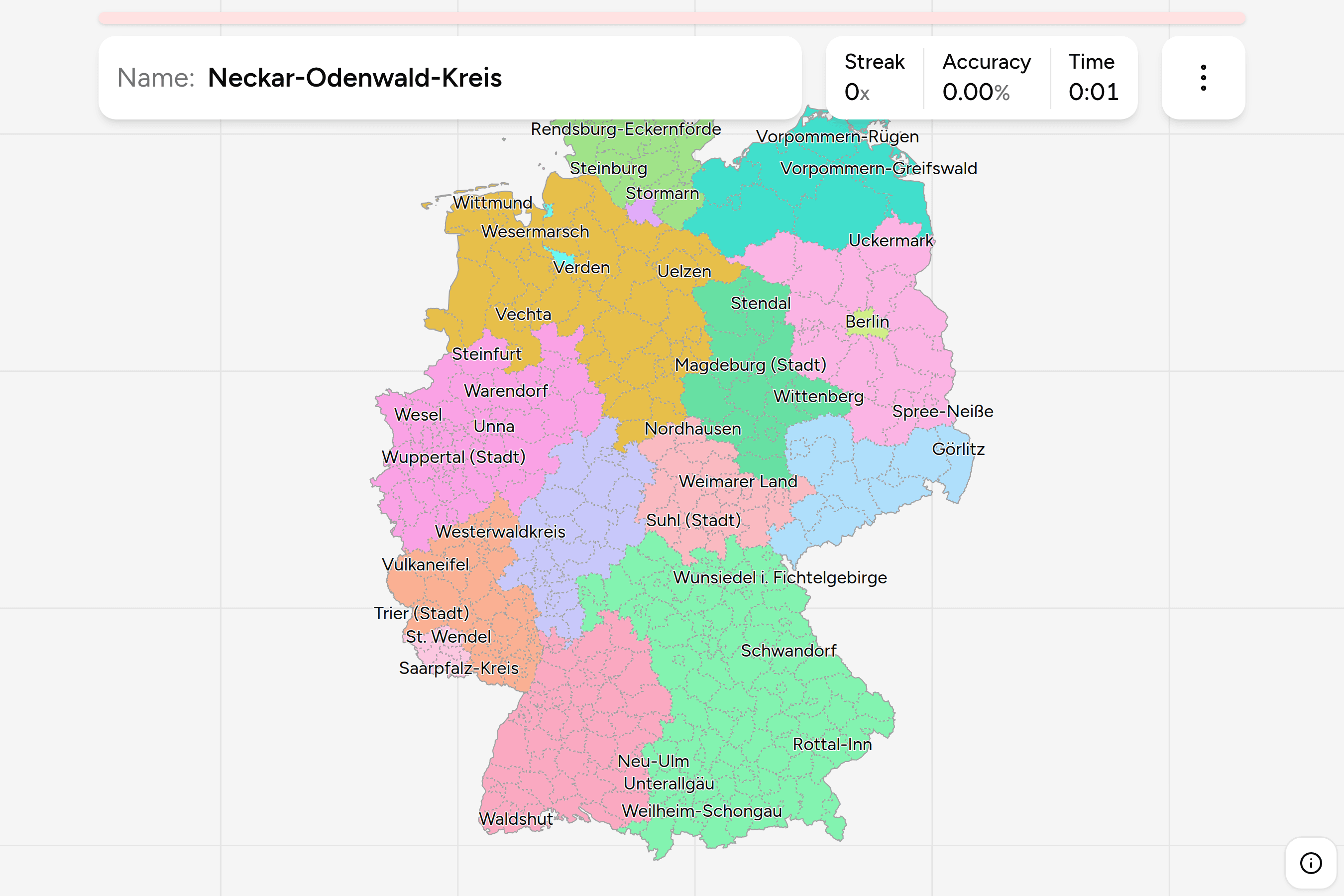
The same map one level down is Spain Provinces, and the
phone numbers are in Spain Dialing Codes. More
European maps in this shape: Germany States, Italy
Regions and France Regions.
Sources